As living microorganisms that support the microbes already found in your body, probiotics tackle a variety of tasks. From balancing flora in the gut to helping boost immunity, thousands of different strains exist, with different objectives. While they aren’t regulated by the FDA, scientific evidence continues to find a positive relationship between these “friendly bacteria” and well-being. That’s why I spoke with a leading dietitian to find the best probiotics that are safe, simple and effective, naming the best option for most people.
Before we continue, an important disclaimer: “No matter how ‘innovative’ a product’s delivery method claims to be, there actually isn’t a ‘best’ format for all probiotics,” explains Dr. Megan Rossi, a gut health scientist. “It really depends on your specific needs.” From digestive health to mood support, people take probiotics for different reasons, and the ones that meet your needs might not meet someone else’s. With that said, some are better than others due to their ingredients, transparency and simplicity. Below, the best probiotics based on research and expert insights.

Why We Named It Best Overall
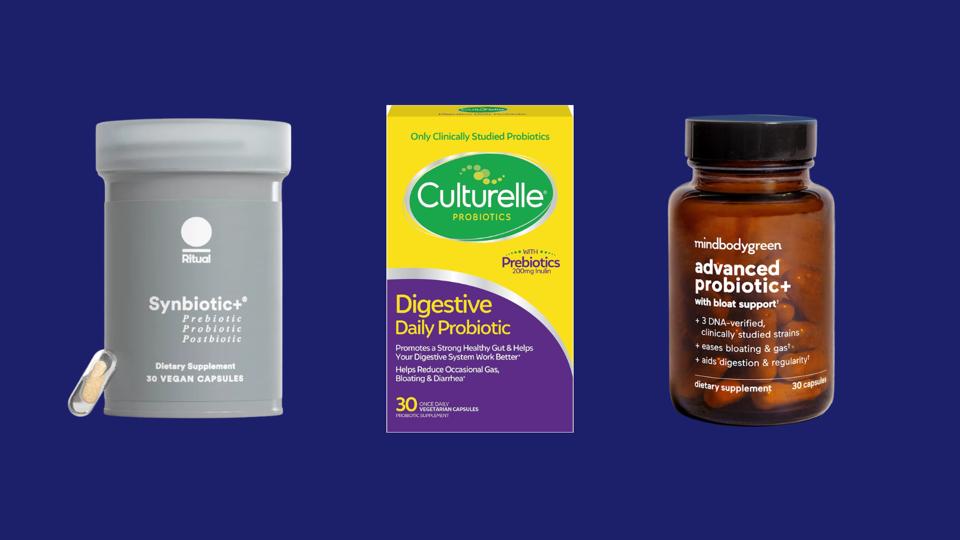
Most probiotics contain just that: probiotics. But Ritual’s Synbiotic+ combines probiotics, prebiotics and a postbiotic, allowing them to work in tandem in a delayed-release capsule. The probiotic component contains two of the most clinically studied strains, LGG and BB-12, that show strong evidence for digestion and immune support, while the prebiotic portion is a non-fibrous blend that targets detrimental gut bacteria, like E. coli. Finally, the postbiotic, tributyrin, helps support the cells lining your gut.
Though it’s more complex, this three-pronged approach—and the fact that Ritual conducts third-party testing and ingredient traceability—makes Synbiotic+ easy to recommend.
Who Shouldn’t Buy It
At around $1.80 per dose, or $54 per month without a subscription, this isn’t a cheap probiotic pick. It also only contains two probiotic strains, so if you’re seeking a more rounded option, you’ll have to look elsewhere. And if you already take a prebiotic that meets your needs, you’ll be paying for an ingredient in this formula that you don’t need. It’s a premium option, and it’s priced accordingly.
Why We Named It Best Value
Containing Lactobacillus rhamnosus GG, the most clinically studied probiotic strain with over 1,000 published studies backing it, Culturelle Daily Digestive Probiotics has the credibility we look for in a supplement, without the eye-watering price. It also includes inulin, a prebiotic fiber that helps “prep” the probiotic bacteria by the time they reach your gut, and it doesn’t require refrigeration. Plus, the CFU count is guaranteed at the expiration date, as opposed to the manufacturing date. If you’re looking for a reliable daily probiotic that’s effective and fairly priced, this is the sweet spot.
Who Shouldn’t Buy It
Again, if you’re managing complex or specific digestive conditions, this single-strain formula may not be the move. Culturelle doesn’t make testing results publicly available, so you might want to look elsewhere if you’re after supplements with complete transparency. And we found a few reports from gluten-free users who had trouble with Culturelle’s probiotics; although the probiotics are gluten-free, they can contain ingredients sourced from wheat as long as it meets the FDA’s definition of gluten-free (less than 20 ppm gluten). If you’re highly sensitive to gluten, you may consider another option.
Why We Named It Best For Men
It’s worth mentioning up front that men and women can take the same probiotics, and benefit from the same formulas. But just as you might tailor your diet to your needs, it’s worth choosing a probiotic that takes things a step further in the name of men’s health, like Culturelle’s Men’s Daily Health Probiotics. It contains the same well-established strain found in the , L. rhamnosus GG, and adds a multivitamin; it includes vitamins, D3, C, B12 and B6, along with magnesium and selenium to support energy levels, metabolism, stress response, muscle strength and reproductive health. It’s not reinventing the probiotic for men, but it is combining a proven strain with additional support to help you check more boxes in one fell swoop.
Who Shouldn’t Buy It
If you already take a daily multivitamin, the blend of vitamins and minerals in this probiotic won’t do much good. It isn’t harmful per se, but it isn’t necessary either. The formula also relies on a single strain that’s known for its relationship with the gut, so if you have more complex issues, it might not be the best option. Though Rossi recommends L. rhamnosus LGG for certain individuals, she also stresses that many other probiotics aren’t backed by definitive research yet. “There’s around 20 or so other areas that we’re starting to investigate, including the link between probiotics and our mental health, our heart health, etc.,” she explains. “But it’s essential to highlight that these areas still require more human clinical research before definitive claims or recommendations around strains and doses can be made.”
Why We Named It Best For Bloating
Bloating is one of the most common reasons people turn to probiotics in the first place, and MindBodyGreen’s Advanced Probiotic+ with Bloat Support is made to lend a hand with three strains geared toward gut health: B. lactis Bi-07 eases bloating; B. lactis HN019 supports digestion; and L. acidophilus NCFM supports healthy bowel movements. The strain-level specificity and third-party testing are exactly what we like to see in a probiotic, and the shelf-stable capsules don’t need to be refrigerated, either. If a general probiotic hasn’t helped with bloating, this is a more targeted step up that might.
Who Shouldn’t Buy It
At $80 per 30-count bottle, this is the most expensive probiotic in this guide, which makes it a real commitment for a product focused on a single problem. You might consider a broader, simpler probiotic first, like , before graduating to something more targeted. MindBodyGreen is also a combination wellness media platform-supplement supplier, so it isn’t focused solely on supplements, though the company’s rigorous third-party testing is reassuring. And if your bloating is tied to a specific issue, like irritable bowel syndrome or a food allergy, a probiotic alone probably won’t serve as your silver bullet.
How We Chose The Best Probiotics
- Expert insights: The benefits of probiotics can quickly become overshadowed by unproven claims, which is why I spoke with a registered dietitian to find safe, effective options for this guide. From strain diversity to CFU counts, we reviewed what actually matters and focused on products grounded in science.
- Label analysis: After speaking with an expert, I pored over probiotic labels to find products worth highlighting based on their ingredients. I also flagged options loaded with fillers or additives that experts deem unnecessary, and even considered storage instructions.
How To Shop For Probiotics
- CFU count: CFU, or colony-forming units, measure how many living bacteria are in a given dose of probiotic. Most probiotics contain somewhere between 1 and 10 billion CFUs per serving, though it’s not uncommon for multi-strain probiotics to contain even more. With that said, more CFUs won’t make a probiotic better or more effective, so don’t get caught up in the numbers alone. As you’re browsing, make sure the CFU count listed on the product reflects the potency at the time of expiration, rather than the time of manufacturing.
- Strain diversity: Different probiotic strains do different things in the body, and a probiotic with multiple well-researched strains will serve you better than one that leans heavily on a single strain. Look for the full scientific name of each strain, like Lactobacillus acidophilus, rather than just “lactobacillus.”
- Targeted benefits: Probiotics aren’t created equally when it comes to health goals. Some strains are better for digestive support, others for immune support, and there are plenty of additional strains that target everything from mood to vaginal health. You should consider what you’re hoping to address before you buy probiotics, and look for strains from there that are supported by clinical research. “Probiotics are frequently marketed as a daily essential for ‘general’ gut health, yet research shows that 77% of people who take probiotics in this way report no noticeable benefit,” says Rossi. “This isn’t because probiotics don’t work, but just as you wouldn’t take vitamin D for an iron deficiency, it’s essential to get specific. You need the right strain (type of live bacteria), at the right time (for a specific issue), in the right way (e.g., pill, powder or liquid format).”
- Shelf stability: Shelf stability refers to how long a probiotic lasts and how you should store it. Some probiotics need to be refrigerated to keep the bacteria alive, while others can be stored in the pantry. Just be honest with yourself about which one you’ll use consistently, because a probiotic that you forget about in the back of the fridge isn’t going to do you any good.
- Third-party testing: The supplement industry is loosely regulated, which makes third-party testing all the more important. Look for probiotics that have been independently tested by groups like , or . Certifications don’t guarantee that a probiotic will deliver a specific result, but they do confirm that what’s on the label is the same thing found in the bottle. According to Rossi, “The also has probiotic guidelines which outline which strains and needs have clear scientific evidence, such as protecting your gut with the LGG probiotic strain when on antibiotics.”
- Dietary restrictions: Read the fine print if you’re vegan or vegetarian, or have an allergy to common ingredients like soy or gluten. Many probiotics are derived from dairy cultures, but there are plenty of alternative options if you’re willing to look.
Why Trust Forbes Vetted
The Forbes Vetted team researches and writes dozens of health and wellness guides each year. We cover products for every stage of the fitness journey, including popular supplements, like protein powders, pre-workouts and electrolyte powders.
- Author of this guide and Forbes Vetted gear editor Cam Vigliotta has over six years of experience reviewing outdoor, fitness and wellness equipment. With a degree in kinesiology, he understands the importance of safe, healthy supplements that help support your body, like probiotics.
- The supplement industry is loosely regulated by the FDA and FTC, meaning plenty of products make bold claims without real proof, and some even contain unsafe ingredients. That’s why we worked with a dietitian to source safe, effective probiotics and reliable information.
Our Expert
- , PhD, RD, APD, an internationally renowned gut health scientist and the founder of The Gut Health Doctor