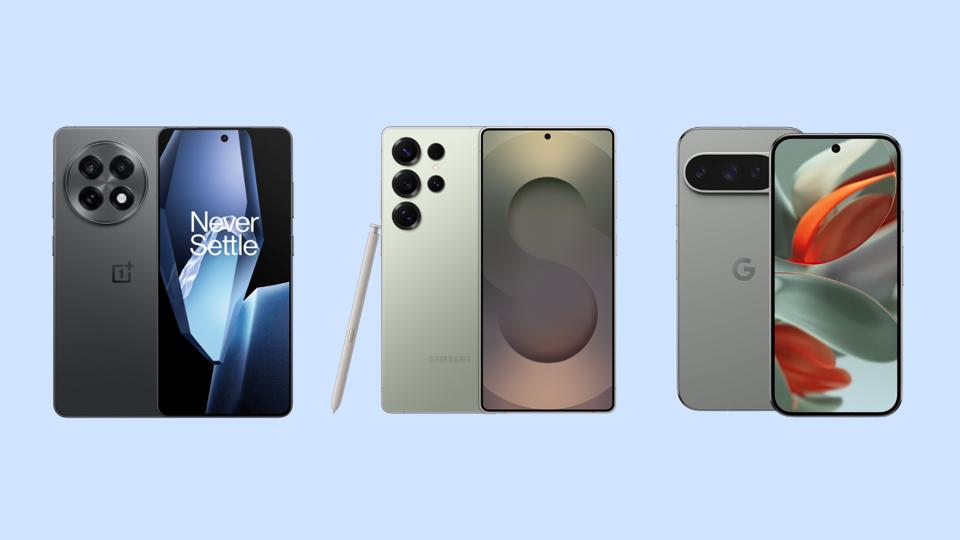
With top-tier cameras, blazing-fast performance and more AI features at your fingertips than ever, the best Android phones allow you to customize your mobile experience. As a consumer tech editor, I’ve spent years attending phone launches and technical product briefings to learn about the latest phones. After rigorously testing more than 30 Android phones over the last three years, I chose the as the best Android phone you can buy. It packs Samsung’s powerful AI engines, called Galaxy, in addition to top-tier cameras that make it stand out from the rest.


One Of The Best Android Phones On The Market
The is not only the best Android phone, it’s also one of the best phones on the market right now—period. Samsung features rounded edges and a pronounced camera plateau. Underneath the titanium chassis, it gets the latest Qualcomm Snapdragon 8 Elite Mobile for Galaxy Gen 5; after running multiple benchmarking tests, it’s one of the fastest processors on the market. It also packs 12GB RAM, and you can get it in 256GB, 512GB or 1TB options.
Privacy Display Keeps Your Scrolling For Your Eyes Only
This year, Samsung showcased a new feature that truly impressed me: You can now hide your entire display from prying eyes. The new feature, called Privacy Display, uses a new technology to obscure the display over 15 degrees in any direction. It’s also customizable, so I could keep most of my display visible while hiding notifications, which I found useful. It dims the display somewhat, but it’s not wholly distracting. Also customizable is my AI agent now: While you’ll need to download it and mark it as your main AI under settings, you can now ask questions via Perplexity when you press the action button.
Two other callouts worth mentioning on the phone that I found delightful for content creators: the new larger camera sensor, which helped increase details and shadowing in lower light images; and what Samsung calls the Super Steady Horizontal Lock. With this latter feature enabled, the video remains in its original orientation as you rotate your phone. It’s very useful for capturing action sequences.
Every Extra Feature May Feel Like Too Much Phone
As I mentioned in my Samsung Galaxy S26 Ultra review, all of these extra features can feel like too much to juggle. If you don’t plan to use every single one, it may seem like overkill. As a remote employee who regularly works from her phone practically hourly, however, I appreciated every extra feature—your mileage may vary. If you like the Samsung Galaxy AI frameworks but don’t need Privacy Display or Super Steady Horizontal Lock, then I recommend considering other options, like our value pick, the Samsung Galaxy S26 Plus.
The 2026 Forbes Vetted Best Product Awards are here: Explore our 150 top-recommended items across categories after extensive research and testing.
Processor Could Be Stronger But Suits Most Needs
The is my favorite small Android phone. I love how comfortable it is to hold in my hand, especially when compared to the bulk of the Samsung Galaxy S26 Ultra. It sports a 6.3-inch Super Actua display with a 120Hz variable refresh rate. And best of all, it offers Google’s version of Qi2 charging, called Pixelsnap. The Google Pixel 10 Pro includes 16GB RAM, and the Tensor G5 chip is strong enough to handle all of your processing needs—just don’t expect it to compete with the powerful Qualcomm Snapdragon processor Samsung uses or the Apple Bionic chipsets.
Cameras Add Powerful 100X Zoom
My favorite part about this phone is also the camera. The collective 50MP, 48MP and 42MP lenses capture images beautifully. I’m caught between two worlds here: On the one hand, I prefer the look of the hyper-detailed images the Google Pixel produces, but I also love the vibrant and detailed color that the Samsung Galaxy S26 Ultra offers. The camera you prefer really comes down to personal preference.
To me, though, the phone’s crown jewel of its new offerings is the 100x Pro Res Zoom, a new AI-based camera software. Take a photo at up to 100x zoom, and the lens reads, registers and upscales the image to a high-quality resolution. It’s pretty revolutionary for capturing images from afar, and while I noticed some warping in a 100x zoom image of a building, it does the job well. Still, expect some limitations. It won’t upscale people or faces, but for buildings, landscapes and more, it’s a standout feature. Read my full review of the Google Pixel 10 Pro for additional details.
A Massive Battery That Lasts For Days
The can last for days on a single charge thanks to its massive 7,300mAh battery, and it’s my recommendation if you value battery life above all else. This model’s charging speeds appear to be a hair slower than its predecessor, the OnePlus 13, but I attributed that to its massive battery upgrade.
It gets a new boxy camera plateau that looks modern and fun, and when paired with a MagSafe case, the phone becomes MagSafe compatible. I also appreciated the brand kept the same IP68/IP69 waterproofing, so it can survive accidental washing machine cycles. It features the Qualcomm Snapdragon 8 Elite Gen 5 Mobile Platform chip, 12GB or 16GB of RAM and 256 or 512GB storage, depending on your configuration.
Mind Space App Helps Bank Voice Notes
One of my favorite features of this phone rests with its action button, upgraded from a traditional slider. While I could program it to open the camera, it can also be programmed to open your preferred AI agent or the brand’s Mind Space app. The Mind Space app can record voice memos and help you create a bank of memories, which I really liked, especially since I could quickly create a voice note to listen to later in the day. I could also create a voice note mentioning a meeting at a specific time, and the software offered to create an event on my Google Calendar, which was my favorite way to use this software.
Good Cameras—For Bright Images Only
In general, I liked the camera set: It captures images well, with nice shadowing and lovely details. However, when I cross-tested the OnePlus 15 against the OnePlus 13, darker shots were noticeably less detailed on the new model. It feels like a downgrade, which left me baffled. It’s not the end of the world, but for those who want the absolute best nighttime and low-light images, it could be a dealbreaker.
The Lightest Foldable—But Removes The S Pen
The best foldable phone on the market is the . Previous iterations felt bulky and heavy, but this latest model reduces the weight—and thickness—to less than that of the Samsung Galaxy S25 Ultra, which is an impressive feat. But it comes at a cost: The S Pen, which I used regularly for signing lease agreements, jotting notes and more, has been removed. By removing the S Pen, the phone loses a unique feature that separated it from the competition. The digitizer layer, or the layer that supports physical writing, was removed, too, so using an S Pen on the phone won’t work and could damage the display.
The Processor Is Good Enough For Most Needs
The Samsung Galaxy Z Fold 7 uses a Qualcomm Snapdragon 8 Elite for Galaxy, and benchmarking lands in between the Samsung Galaxy S24 Ultra and the Samsung Galaxy S25 Ultra. While it’s not the best, these numbers tell me that extra software and display requirements simply require more processing power. Ultimately I don’t mind this trade-off, since a smooth experience and all-day battery life are my priorities in a phone.
It’s also an exceptional phone for productivity: Open the main display and it turns into a miniature tablet. You can split the screen in two to multitask across different apps, which I found useful when reviewing incoming emails and composing new ones in Outlook, as an example.
New Hardware Upgrades Come To The Camera
The phone’s cameras also received an upgrade with this new model: The wide lens increases from a 50MP to a 200MP lens while retaining the 2x optical quality zoom. It took Samsung a few years to finally implement this new lens, but it’s a smart upgrade. Low-light shots turned out beautifully, with impressive details and warm colors without feeling oversaturated. There’s also a new 100-degree field of view in the selfie cam to capture more people in a photograph. Still, I recommend turning the phone around and using the cover display as your selfie camera—the photographs will be crisper.
One more thing to note about the Samsung Galaxy Z Fold 7: It’s quite expensive. If you want a foldable phone at a lower price, I recommend looking at the Samsung Galaxy Z Flip 7, but it’s a clamshell-style foldable phone, and not a booklet-style one. Read my full review on the Samsung Galaxy Z Fold 7 for more details.
Eight Months Later: Still Looks New
After eight months of long-term testing, the Samsung Galaxy Z Fold 7 still looks brand new. While some Redditors have reported that the colorway chips, I haven’t experienced that with my unit. My only complaint is its battery: I wish it would last longer, especially when I’m in the city for all-day events. I’ve learned to carry a portable charger on long days so I can work, game and read.
A New, Completely Flush Design
If you’re looking for a phone and trying to spend $500 or less, the I found the to be best value pick. Simply put, it’s a delightful phone to use. Google tweaked its design so it doesn’t have a camera plateau; the lens sits completely flush on its case, which keeps it from sliding off of surfaces. This design tweak is particularly impressive because most models sport that bump—and this budget-friendly phone bucks that trend. While it comes in Obsidian, Berry and Fog, I’m obsessed with the lovely Lavender colorway I tested. It looks and feels luxe.
New Charging Speeds, Still No Pixelsnap
The Pixel 10a’s biggest upgrade is its charging speed, which increased from 23W to 45W. When I was running out the door and forgot to charge it overnight, that upgrade helped power me through a half-day in the city. Keep in mind that while the Google Pixel 10 and Pixel 10 Pro lineup features Google Pixelsnap wireless magnetic charging, the 10a only offers wireless charging—no Pixelsnap included. There also aren’t a lot of changes from its predecessor, the Google Pixel 9a. It features the exact same Google Tensor G4 processor and the same camera lenses, too.
A Nice Suite Of AI Software Features
While you don’t get a dedicated telephoto lens, the cameras have an array of useful software features including Camera Coach and Auto Best Take. I enjoyed these on other Google Pixel phones, and it’s a nice addition. And, of course, you get access to Google and its suite of Gemini features, which I found useful when searching for quick answers or weather forecasts.
A Nice Design And Balanced Features
The is slightly smaller than my top pick, the Samsung Galaxy S26 Ultra. It also lacks the integrated S Pen. For those who don’t plan to use the S Pen but want a larger display and a good camera set, this mid-priced Android phone feels like an excellent balance of those must-haves. Its QHD+ display showcases vivid colors and nice detail when streaming, and it feels comfortable in my hand when surfing the web.
A Fast Samsung-Branded Processor
What’s also different this year from the Samsung Galaxy S25 Plus: The brand ditches a Qualcomm processor and now uses its own Eyxnos chipset. The processor benchmarks a bit softer than I’d like, but it’s still fast and speedy when I’m streaming. Multiple attempts to slow the response time or freeze the phone proved fruitless; no matter how hard I tried, applications and my taps felt speedy. While the phone warmed, gameplay felt responsive and smooth, too.
Excellent Cameras, With One Caveat
The cameras are excellent. Low-light details on the Samsung Galaxy S26 Plus were more present and noticeable than the OnePlus 15. It doesn’t have the 100x digital zoom or 5x optical zoom the Samsung Galaxy S26 Ultra sports, though. While the 50MP main camera suffices for most, keep in mind that there’s no 200MP main camera on the S26 Plus. If you want the absolute best camera set, you may want to opt for the Ultra model. If you also want the same features in a smaller case, consider the , its smaller, 6.3-inch twin.
Other Android Phones I Tested
I’ve tested over 30 Android phones since 2023, comparing features, interfaces, benchmarking speeds and more. When a brand releases an updated or new model, I carefully review the new phone and consider how it stacks up against other smartphones on the market. Although the models below didn’t make my final list, they still offer features that may make them a good choice for you, depending on your needs.
- Samsung Galaxy S25 Ultra review (4.5/5 stars): My former top pick, the Samsung Galaxy S25 Ultra, added new AI-based features like Now Bar, Now Brief and upgraded Circle to Search. It also features a 50MP ultrawide camera that takes more detailed and more colorful photos than its predecessor, the Samsung Galaxy S24 Ultra. Comparatively, the OnePlus 13 phone sports a 50MP ultrawide, and the Google Pixel 10 Pro has a 48MP ultrawide lens.
- Samsung Galaxy S25 Edge review (4/5 stars): I really liked the thinness of this phone, but I’m still not sure who this device works best for. The cameras are good, and the processor is certainly speedy. Its thinness keeps it lightweight, but that also comes at the cost of battery life.
- Google Pixel 9 Pro review (4/5 stars): My former top pick for the best small Android phone features a powerful camera set and a bright 6.3-inch display—and it happens to come in a lovely shade of pink. While it’s still a great phone, the Google Pixel 10 Pro offers a stronger processor and longer battery life.
- Samsung Galaxy Z Flip 6 review (4/5 stars): Released in 2024, this clamshell-style foldable phone is a solid option for anyone who enjoys taking tons of pictures and videos, and those who want to take advantage of AI creativity features. However, the is a better choice if you prefer a larger screen and multitasking features.
- (4.3/5 stars): The Samsung Galaxy S25 Plus is a great phone if you’re seeking a balance of price and performance. It’s not quite as large as the Samsung Galaxy S25 Ultra, and its cameras produce detailed images. But while the Samsung Galaxy S25 Ultra has a 50MP ultrawide camera lens, the Samsung Galaxy S25 Plus only offers a 12MP ultrawide lens. It still takes good pictures, but if you want the absolute best camera set, opt for the Samsung Galaxy S26 Ultra.
- Samsung Galaxy Z Flip 7 Review (4.5/5 stars): If you want a compact device but don’t want to spend $2,000 on a phone, the Samsung Galaxy Z Flip 7 is a great option. The new Flex Window, or cover display, stretches across the entire top panel so you can enjoy a larger display for sending text messages, the weather and other notifications without opening the device. For the first time ever, DeX software, which essentially turns your phone into a mini PC, comes to the Flip series to help you be more productive on the go.
- Google Pixel 10 Pro Fold Review (4/5 stars): The Google Pixel 10 Pro Fold features an IP68 waterproof rating for taking your phone to the beach. Compared to the Samsung Galaxy Z Fold 7, it’s pretty bulky, and the large camera plateau doesn’t help, either. It doesn’t offer the 100x Pro Res Zoom found in the Google Pixel 10 Pro, but it does have Instant View, a feature that shows your recently captured image in the left-hand window so you may preview it. Drag and Drop, which allows you to drag and drop files from one window to another, is also useful for on-the-go workers.
- OnePlus 13 Review (4.5/5 stars): If you’re prone to accidentally washing your phone with your laundry, the OnePlus 13 can survive full cycles thanks to its robust waterproofing. My former best pick for battery life has a massive 6,000mAh battery that lasts longer than other models I tested. With a case insert, it is also MagSafe compatible. Its camera set—a 50MP main camera, a 3x 50MP triprism telephoto lens and a 50MP ultrawide lens—captures details nicely.
- Samsung Galaxy S24 Ultra review (4.5/5 stars): As the predecessor to the , this Samsung phone offers a similar experience as our top choice. That said, the Galaxy S25 Ultra has a slightly larger display, an upgraded chip and a more detailed camera. Samsung also no longer sells the Galaxy S24 Ultra, but pre-owned options are available.
- (4.3/5 stars): The Samsung Galaxy S26 is the smaller twin to the Samsung Galaxy S26 Plus. It features the same Galaxy AI features and the exact same camera set. While the 50MP main camera suffices for most, there is no 200MP that’s found on the Samsung Galaxy S26 Ultra. The 6.3-inch display feels comfortable to hold in your hand, but the 6.7-inch that the S26 Plus sports is better for multitasking.
- Google Pixel 9a Review (4.5/5 stars): The Google Pixel 9a features a sleeker, near-flush design. Its display may not be as sharp or bright as the Pixel 10 Pro, but it still looks nice and has all‑day battery life. Performance is decent for everyday use, but gaming and multitasking show the limits of the Google Tensor G4 chip and 8GB RAM. The Google Pixel 10A has faster charging speeds, though.
- Google Pixel 8 review (4/5 stars): This Android phone is the 2023 version of Google’s flagship mobile device. As the older sibling to the , it has a solid camera and a sophisticated, yet lightweight design. However, the newer Pixel 9 has improved specs, making it a better overall choice for most people. While you can’t purchase it new, you can find it on resale websites.
- (4.3/5 stars): If you’re seeking a mid-priced phone, the OnePlus 13R offers many of the same features and hardware as the OnePlus 13. It still has a Qualcomm Snapdragon 8 Gen 3 processor, which is a 2024 chipset, but is strong enough for most needs. Its 12GB of RAM is plenty to run Google Gemini, and 256GB of storage suffices for casual users. Unfortunately, you cannot find it available in new condition in the U.S., but you can find it used on resale websites.
- OnePlus Open review (4/5 stars): My former top pick for the best foldable Android phone may be a first-gen model, but it’s one that’s well worth the investment. I personally loved testing it for reading and casual internet browsing, and I felt it showcased beautifully as a productivity device. You can split the screen to multitask; as an example, within LinkedIn you can scroll through your feed on one half and pull up a post on the other. Also, while its cameras are powerful, they could be stronger after two years on the market. As of now, you cannot find it available in the U.S.
Android Phones I Plan To Test Next
Because new Android phones release every year, there are a few I plan to test in the near future.
- : The brand just released its latest budget-friendly phone that features a futuristic design with a sleeker camera bump. There’s also a new lens and some incremental upgrades including faster wireless charging speeds, a new processor and more.
- : Teased at CES 2026 and officially announced at Mobile World Congress in Barcelona, Spain, the Motorola Razr Fold is the brand’s first booklet-style foldable phone. What’s most intriguing: While Samsung removed its S Pen integration, the Motorola Razr Fold is compatible with the Motorola Razr Stylus, a physical pen that can write directly on the screen. Preorders begin April 13, and shipping begins later this year. This is the next foldable phone I’m watching closely. You can register to stay updated on its launch right now.
How I Tested The Best Android Phones
Because there are countless Android phones on the market, I made sure to evaluate each contender by a specific set of criteria. Below is a breakdown of how our team approached testing when determining the best Android phones of 2026.
- Contenders: I narrowed down the contenders, selecting only reputable brands to test, including Samsung, Google and more.
- Length Of Testing: I used each device for at least two weeks (and often, more than several weeks—or months, in the case of the winners), taking calls, snapping photos and more. I also keep tabs on the latest developments in the industry by regularly attending Android press events.
- Performance: I took calls, sent messages, snapped photographs of various subjects and more. I carefully reviewed each Android phone’s specs, taking into account processors, RAM and overall build quality.
- AI Integrations: I used each device’s latest features to see how the phones performed under various tests.
- Cameras: I put the cameras through their paces, cross-testing each lens against one another under a variety of circumstances. While many of these cameras made their way around the world for testing, including Mexico, France and more, I mainly tested the cameras around New York City. I also used my three cats and husband as models for testing portrait shots on each device.
- Expert Knowledge: For the last three years, I’ve attended almost every Android phone launch.
What To Consider When Choosing The Best Android Phone
We all spend more time on our phone than we’d like to admit. Whether your screen time consists of taking calls, scrolling socials or snapping pics, it’s important that your Android phone aligns with your specific needs. To help find the right Android phone for you, we outlined the top factors to consider, below:
- Build Quality: If you’re accident-prone or simply want an extra-sturdy phone, opt for waterproof ratings of IP68 and IP69. As a whole, most Android phones are made with high-quality materials such as titanium, aluminum and Gorilla Glass.
- Performance And Software: Although all phones from Google, Samsung and OnePlus run Android OS, the individual user interfaces and hardware create a unique experience for each device. The interface on Google phones is more streamlined and minimalistic than that of Samsung phones, which prioritize rich features and customizations. Each brand also receives software updates and security support at different rates. “Google phones get the fastest updates, while Samsung offers longer-term support,” says Jeremy Rambarran, a professor at Touro University Graduate School of Technology.
- Display: There are three key components to consider when looking at an Android’s display: screen size, resolution and refresh rate. As the name suggests, screen size refers to the dimensions of the display. The best Android phones range from 6.3 to 7.8 inches, with the large models being a top choice for people who frequently game or watch movies on their phone. For gamers, check to make sure the phone has a 120Hz refresh rate so you can enjoy a sharp display that won’t jerk or shutter as you game.
- Photography: While any phone can take an average-looking selfie, the best Android phones are fitted with advanced photography features that can adjust for different lighting and contrast levels, so you can take vivid pictures in nearly any scenario. Some Android phones also come with image stabilization features that help minimize the effects of shaky hands.
Why Trust Forbes Vetted
The Forbes Vetted team has published hundreds of tech and electronics guides that leverage our hands-on testing and research.
- Author Rebecca Isaacs has been a tech journalist for more than six years and is Forbes Vetted’s consumer tech and electronics editor.
- She has done deep dives into the Apple ecosystem—including testing the most recent iPhone model, the iPhone 17e—and has tested most Android phones on the market as well. She’s produced guides to the best iPhones and the best Samsung phones based on hands-on insights.
- Isaacs has been testing phones for several years. For this story, she started testing Android phones in July 2023 and rigorously tests each new model, often for months, as they roll out.
Our Experts
- , professor at Touro University Graduate School of Technology
- , a professional landscape photographer