Our cats would be perfect if only they could scoop their own litter. While that’s never going to be a reality, I found the next-best thing: litter boxes that clean themselves. To find the best automatic litter boxes worth the investment, I enlisted my three favorite felines to put seven top-rated contenders to the test. Together, we determined that the smart and spacious by Whisker is the best option for most, though the significantly lower-priced came in a close second. Below, delve into the details of my tested findings along with expert tips on finding and maintaining the best automatic litter box for your household.
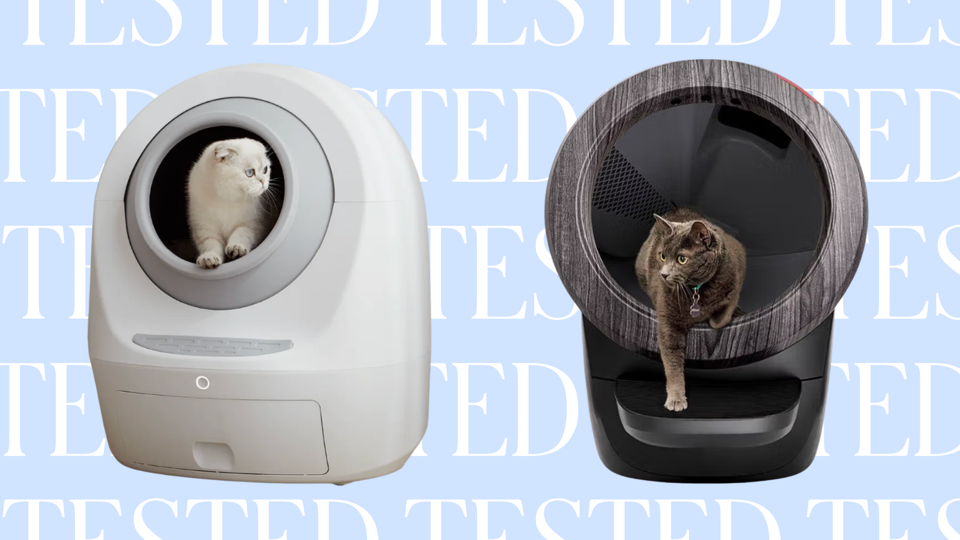
Is the Litter-Robot 4 worth it? After testing both the Litter-Robot 3 and 4 (believe it or not, I owned both models prior to beginning this official testing process), I can answer that question with a definitive, confident “yes.” (Check out my full review of the Litter-Robot 4 and my comparison with the 3 if you want all the details.) I know that spending $699 on a litter box can feel ridiculous—I’m not even sure I’d spend that on a toilet for myself. But I consider the Litter-Robot 4 to be more of a “cat poop assistant” than a “passive kitty bathroom.” If you want a top-of-the-line smart machine, there’s simply no comparison.
A Larger Opening And The Smartest, Quietest Pick
While either Litter-Robot model is worth it in my opinion, the latest Litter-Robot 4 is the best choice for several reasons. First, this newly redesigned automatic litter box has a much bigger opening. According to Jacob Zuppke, president and CEO of Whisker, the company that makes the Litter-Robot line, this decision was really about making the cat’s experience better. “What if you went into a porta-potty that was too small for you to get in and turn around? You wouldn’t want to touch anything in there,” he says. “Why would we not make a cat’s litter box large enough for the cat to get in and turn around?”
It was also far and away the “smartest” of all the devices I tested. It connects to a free app that monitors litter and waste levels, and it sends you notifications when it finishes a cycle and the drawer needs emptying. The device can even track your pets’ weight so it can identify which cat is using the box in a multi-cat household. Finally, this self-cleaning litter box was also the quietest of all the models I tested; you can barely hear it when it’s running through a cycle.
Multi-Cat Parents Will Like The Spacious Interior And Waste Drawer
The Litter-Robot 4 has an appropriately roomy interior and upgraded waste drawer, which gave me peace of mind that my three cats were comfortable. Not only could these big boys get in and turn around, but they were also able to back up and cover their waste with litter when they were done doing their business. (And note that I’m not exaggerating when I call them big: My largest cat is 15 pounds.) The waste drawer’s capacity was also recently upsized from the Litter-Robot 3, from 9 liters to 10 liters. Both of these Litter-Robots far exceed the other two picks I tested in that regard.
Upgraded Safety Features Are Highly Responsive
Also, the upgraded laser-sensing system in the Litter-Robot 4 works unbelievably quickly. I have curious kitties who like to watch their poop disappear, so I appreciated how fast the new sensor system reacted—it shut the rotation cycle off immediately.
It’s also worth noting that the Litter-Robot devices are manufactured in the U.S., and Whisker has full control over the supply chain. Zuppke tells me there’s a testing protocol for each litter box, so you know you’re getting a machine that’s safe for your cat. The brand also employs its own engineers who are constantly working on and deploying firmware updates to improve the way the litter box works.
Excellent Odor Control, But Deep Cleaning Is A Pain
The Litter-Robot 4 has an extra-large waste drawer—meaning you won’t have to empty it as often as its predecessor—that’s designed with better odor control, thanks to the built-in carbon filter and an extra-tight seal. (Plus, Whisker also offers optional , which use natural, pet-friendly oils to trap and eliminate odors.) The roomy interior of the Litter-Robot 4 also had the additional benefit of helping with odor: In some of the other self-cleaning litter boxes, I tested, turning around wasn’t an option, so my cats just left their waste uncovered, which I can assure you didn’t result in a great smell.
So, what’s not to love about the Litter-Robot 4? Well, it’s quite big. As far as litter boxes go, it’s not inconspicuous in the slightest. But if you have the extra space (and the extra budget), Whisker’s is a great way to hide the entire device. Deep cleaning is a pain here, too, but that’s par for the course when it comes to automatic litter boxes, and you only need to do it once every few months. You’ll have to take the pieces apart and wash them; I took them outside and used my pressure washer. The whole process takes about 30 minutes, but you’ll also need to let the components dry completely before putting them back together.
Over Two Years Later: Still The Best Despite Drawer Sensor Issues
Cleaning the Litter-Robot 4 has become much easier over time; I’ve got a system down. While the task is still a bit of a nuisance, this litter box’s performance and odor-fighting design make it worth it. That said, I’ve run into some issues with the drawer sensor showing the drawer as full when it’s actually not. This requires a recalibration of the sensor (which is easy to do, but kind of an inconvenience), because when the drawer sensor reads as full, the machine won’t cycle.
The 2026 Forbes Vetted Best Product Awards are here: Explore our 150 top-recommended items across categories after extensive research and testing.
PetSafe’s ScoopFree Crystal Pro litter box does not compare with the more advanced features of the or the —but it’s not meant to. It’s really intended to be more of an upgrade from the traditional litter box.
Easy To Use With Reliable And Safe Operation
To operate the PetSafe ScoopFree, you load the pre-filled disposable tray into the bottom of the litter box and plug it in. From there, the safety motion sensor clocks when your cat has finished using it. An auto-cleaning cycle kicks in exactly 20 minutes after your cat leaves, which helps keep your cats safe and prevents them from being startled. The rake sweeps waste into a covered trap that sits at the front of the machine. During testing, the whole operation’s timeline was incredibly reliable.
Excellent Odor Control And Ease Of Cleaning
Note that this litter box is compatible only with , which doesn’t clump together like clay litter. Because of this, the rake often moved through the urine, and the litter absorbed it rather than pushing a clump of it into the waste drawer (note that this is, in fact, what’s supposed to happen per the device’s manual). That being said, the odor control was great—I could see the urine in the box, but I couldn’t smell it.
And cleaning this box was a breeze compared with the others I tested; all I needed to do was lift the unit to access the waste drawer and scoop out the piled-up waste, which takes just a few minutes and only needs to be done every few days. To make cleaning even easier, you can grab , which are disposable and pre-portioned with crystal litter. This way, when you need to clean it, you simply have to lift up the top, pull the disposable tray out and toss it.
There’s A Smart Version, Too
While the base model lacks any smart features, an is available for an extra $90 (I tested the standard version). That model retails for about $90 more, and it gives you feedback on your cat’s bathroom habits via a litter-cycling tracker. It’s a solid middle-ground option for those who want more sophisticated features without the Litter-Robot price tag.
The Leo’s Loo Too by Casa Leo is larger than a standard box, but its appealing design blended seamlessly into my home. Available in four modern hues (gray, green, blue and pink), you can choose the one that works best with your décor.
The litter box cycled like clockwork, and I never received a single error message in the accompanying app. The cycle time is also faster than the ’s—it cycles in one direction, while the Litter-Robot rotates one way and then has to reverse direction to complete its cycle. The Leo’s Loo Too also has an odor-resistant design, which includes carbon filters, a UV sanitizing light and a tight-fitting lid. While its odor control was reasonably effective in my early testing of this model, after long-term testing, I’ve found it requires more frequent cleaning to keep smells at bay (see the “Deep Cleaning” section below).
Convenient Wi-Fi Control And Advanced Safety And Health Features
The connected app here lets you control the rotations per cycle and automatic time delay (you can set it for anywhere from six seconds to 20 minutes after your cat leaves). You can also turn off automatic rotations and schedule cleaning sessions instead, which is a good option if you’re worried about it running while you’re not home. The app tracks how often your cats use the box and, like the Litter-Robot, it can differentiate between cats in a multi-cat household by judging their weight. This feature can be helpful at alerting you of any bathroom issues or weight fluctuations. It’s also compatible with Alexa and Google Assistant voice controls.
Leo’s Loo Too features three types of sensors to ensure your cat’s safety as well: a radar sensor that forms a “protective wall,” four weight sensors that detect when your cat is inside and an anti-pinch sensor located at the top of the weight drawer.
A Smaller Entry And A Slightly Louder Operation Than Litter-Robot
All that said, the Leo’s Loo Too is louder than the Litter-Robot. It’s not obnoxiously loud, but you can definitely hear it when it’s running. Note, too, that the chamber entrance is considerably smaller than the Litter-Robot models, and the size did present a problem in that it was slightly trickier to fill the box with litter.
More Than Two Years Later: Odor And Deep-Clean Challenges
Deep cleaning it is pretty much the same process as it is with the Litter-Robot models: You have to take apart all the components, wipe them down, then wait for them to dry before putting them back together. Casa Leo recommends deep cleaning every four weeks.
Admittedly, the Leo Loo Too’s waste drawer compartment has been really difficult to clean. There are a lot of nooks that are tricky to get into, especially if waste or litter spills out of the drawer. Further, it doesn’t contain smell as well as it used to; over time, it has started to require more frequent cleanings.
Other Self-Cleaning Litter Boxes I Tested
After a lengthy research period, I considered nine automatic litter boxes, then narrowed those down to the seven I felt were worthy of testing. The following is a list of all the non-winning models I tested, including two that may be worth considering.
Self-Cleaning Litter Boxes Worth Considering
- Best Less-Expensive Litter-Robot: : Although the Litter-Robot 3 Connect earned high marks during testing, it ultimately got pushed out by the upgraded . Its smaller waste capacity required more frequent changing, and it doesn’t contain odors quite as well. But if you want to save a little cash, you’ll be perfectly happy with this version. (Check out my in-depth comparison of the two Litter-Robot models for more details.)
- Best For Smaller Cats: (Discontinued For ): I thought this litter box’s design was cool, but my cats simply didn’t take to it like the others. The opening is a lot smaller, and my big boys looked a bit cramped and uncomfortable when using it. If you have smaller cats, the upgraded version, the similarly sized , could be an option.
Self-Cleaning Litter Boxes I Don’t Recommend
- : This didn’t hold up as well as the similarly designed Litter-Robots in performance or convenience. The small waste drawer needed frequent emptying, especially with multiple cats. I also found that waste got stuck on the top of the chamber.
- : This potential value pick left me unimpressed during testing. It’s a messier option all around, requiring near-constant emptying, especially with my multiple cats. In fact, it almost felt like more of a hassle than just scooping a regular litter box.
6 Self-Cleaning Litter Boxes I’m Testing Next
As the automatic litter box market continues to expand, I plan on testing another crop of models to see if any are worth their salt. Here are the six self-cleaning litter boxes I intend to try out next.
- : The newest of this line takes the tried-and-true Litter-Robot 4 and adds smart features for tech-savvy owners looking for more insights. These include waste identification, cat identification (via AI camera or RFID tag) and an LCD color screen.
- : The maker of our top tested cat water fountain, Petlibro, just launched the Luma Smart Litter Box. This open-top model, similar to the Litter-Robot 5, features AI-powered cat and waste ID for several cats. It also has a built-in fan that moves air through a carbon deodorizer to help manage odors.
- : This is a highly coveted, well-reviewed model that flushes waste through your plumbing so you don’t have to empty a waste drawer.
- : This highly rated model stands out with its open-top design, which creates a more spacious entrance that some cats may prefer. Its large capacity holds up to 14 days’ worth of waste, and its “pull and wrap” disposal system traps waste in an odor-blocking bag before you dispose of it. (Editor’s note: Neakasa’s support team recently released a regarding two safety incidents with the M1, saying the litter box’s firmware was recently updated to fix the issue. We’ll keep an eye on developments to see if it’s still worth testing this model.)
- : The modular, magnetic design of this automatic litter box is designed for easy cleaning and regular maintenance. It also earns points for its sleek aesthetics and neutral color options, which include cream, gray and beige.
- : This self-cleaning litter box is priced lower than other models with a similar design, so I’m curious to see how it holds up against its more expensive competition. Assembly and disassembly for this unit appear to be simple, too.
How I Tested The Best Self-Cleaning Litter Boxes
Since I couldn’t actively test the self-cleaning litter boxes myself (that would be weird, no?), I enlisted the help of my furry crew. Here’s how I set up the testing process:
Testing Panel
- Testers: Alfred, Harvey and Bruce are three feline brothers who have no problem vocalizing their disdain for certain litter boxes or, well, anything else for that matter. If anything wasn’t up to their standards, I assure you—I would know immediately.
- Timeframe: I allowed the cats to use each litter box for three weeks total. I also made sure to test several at once, placing multiple models in my house during the same three-week period so I could monitor whether one was preferred over another.
- Location: For each three-week-long round of testing, I set up two of the three to-be-tested litter boxes upstairs and one downstairs. (Because I have three cats, this is how many litter boxes I normally have in my house, so the cats weren’t being deterred by a box in an unusual place.)
Performance Metrics
During testing, here are the determining factors that we—meaning my cats and I—looked at:
- Performance: I monitored how well the litter box worked after my cats used it, considering whether or not it successfully removed waste, if it got stuck during a cycle and if it properly connected with the app (when applicable). I also considered whether or not litter got thrown from the box and onto the floor (my pet peeve) or if clumped waste stuck to the roof of the chamber and had to be scraped off.
- Odor control: For this test, I left waste in the drawer for one week to see how well the litter box contained the odor. The only exception here was if the waste drawer was not big enough to accommodate this, as was the case with the value picks. I used the same litter in all the boxes I tested, with the exception of the , which requires crystal litter, to create somewhat of a controlled experiment. After two years, I’ve noticed the odor control in all the litter boxes definitely diminishes over time and you have to keep up with the filter changes or you’ll notice it. Also, the deep cleaning is important for controlling odor too, and it’s generally recommended to do this every one to three months. That said, with three cats, waiting three months would definitely be pushing it.
- Safety: I noted the safety features of each design that ensure that my cats don’t get startled or trapped in the box as it’s operating. These include a delay in when the cleaning cycle starts and automatic shut-off if it senses a cat entering during a cleaning cycle.
- Ease of cleaning: I gave the litter boxes daily wipe-downs with , noting how easy they were to clean and whether or not I could reach all of their parts. After the testing period, I followed deep-clean instructions for each box, timing how long the process took and noting how convenient (or inconvenient) it was to go through all the steps.
- Litter usage: I filled each litter box up to its max fill line, noting when each needed a refill and how long it took to go through a full box of litter. Each litter box is a different size, so this isn’t an apples-to-apples comparison, but this was a good way to factor litter usage into the overall cost of the machine.
- Extra features: When applicable, I tested each machine’s extra features and noted how well they worked. Some of these features included connecting to an app and setting up alerts, or using automatic cleaning functions on the less tech-heavy machines.
- Subjective cat tests: Cats are finicky, and they aren’t always willing to use every litter box. Granted, every cat is different, but I paid attention to whether or not my cats took to the litter box or if they tried to avoid it and/or were scared of it. After all, they are the ultimate judges of which litter box they think is best.
- Long-term use: Two years after the formal testing process, we continue to use (and love) the and the , securing their spots on this list.
How To Choose An Automatic Litter Box
Once you’ve decided it’s worth investing in a self-cleaning litter box, it’s important for your cat to like the model you choose; otherwise, your pet likely won’t use it. Here’s everything you should consider when picking an automatic litter box.
Size Of The Box
Self-cleaning litter boxes tend to be significantly larger than your typical litter box, so you really need to think about where you can put it in your home. If you’re not keen on how it looks out in the open, some companies like make storage furniture that’s large enough to accommodate an automatic litter box. Just keep in mind that this will increase the litter box’s footprint even further.
Size Of The Opening And The Waste Drawer
If you have larger cats, make sure the opening and litter chamber are large enough to comfortably accommodate them. The size of the waste drawer determines how often you’ll have to empty it. If you have one cat, you’ll probably only have to empty a small waste drawer twice a month. If you have multiple cats, opt for a larger waste drawer, unless you’re planning to empty it at least once a week.
Litter Compatibility
Some of the magic of a self-cleaning litter box is in the litter. According to Zuppke, clumping litter is superior because the clumping process is what effectively traps odor. Non-clumping litters often use fragrances and heavy scents to try to cover the smell, but this can only go so far.
Further, clumps are also more easily removed from an automatic litter box. When the rotates (see the video below), for example, it passes the chamber’s contents through a grate that sifts out smaller particles and directs the clumps to the waste drawer. If the litter doesn’t clump effectively, then liquid waste can get left behind. All said, ideally, you should get an automatic litter box that’s compatible with a or a litter that you use now and are comfortable with.
Most automatic litter boxes call for regular clay clumping litter, with the exception of crystal-based boxes. While crystal litter is effective at trapping odor, it doesn’t clump, so liquid waste isn’t as effectively removed as with the clumping litter. (Learn more about the best cat litters based on our testing 11 top formulas.)
Minimizing Malfunction Risks
One of the biggest disadvantages of self-cleaning litter boxes is the malfunction risk. “Robotic litter boxes do carry a risk of injury to your cat. If it goes off at the wrong time, your cat could be hurt either physically or psychologically,” says Joey Lusvardi, an IAABC-certified cat behavior consultant and founder of Class Act Cats. “Pay close attention to what features it has so your cat doesn’t get caught in the box as it’s operating. This may include a delay in starting a cleaning cycle or an auto shut-off feature, should it detect a cat has entered the box during a clean cycle.”
Both high-end and affordable self-cleaning litter boxes can be susceptible to malfunctions. For instance, the $380 had two reported safety incidents, according to the company’s there are also several affordable models like the Amztoy (and similar devices under various generic-sounding brand names) that to serious injuries or death in cats. In general, it’s good practice to avoid products from non-established brands.
Health Monitoring
Even if you choose a self-cleaning litter box with a stellar safety track record, that doesn’t mean they’re totally hands-off devices. “One of the disadvantages of self-cleaning boxes is you don’t get to observe your cat’s waste for changes that may indicate a need to go to a veterinarian,” says Lusvardi. “You could miss something like blood in their waste or a change in frequency of using the litter box. Self-cleaning boxes that alert you when they do use the box can help mitigate at least some of this, so it’s better to find a box that has these features built in.”
App And Connectivity
In my opinion, it’s worth the upgrade to a machine that has a useful corresponding app. The Litter-Robot app can alert you when the waste drawer is full, when the litter level is low and when your cat uses the bathroom—but it does so much more than that, too. It helps you identify patterns in your cat’s bathroom behavior, so you’re more likely to notice if something’s off and your cat needs to go see the vet.
Warranty
At the end of the day, automatic litter boxes are electrical appliances that can break down over time. They’re also hefty upfront investments, so you want to make sure you’re covered should anything go wrong prematurely. Check the warranty on the model you’re considering and make sure you’re covered for at least a year. Often, manufacturers will give you the option to purchase extended warranties that increase the coverage period to three years or more.
How Do Automatic Litter Boxes Work?
Yes, self-cleaning litter boxes work—but how? Here are some of the top features you’ll find on most automatic litter boxes that allow them to function self-sufficiently, and, in some cases, help you monitor your cat’s health.
Safety And Health Tracking Features
These devices use either motion or weight sensors (or both) to detect when your pets goes inside so they don’t get caught in a cleaning cycle. Some advanced versions, such as Whisker’s and the , have added safety features like anti-pinch software. Certain automatic boxes, like the two mentioned, can also monitor litter usage, waste levels and health metrics (like your pet’s weight) using a mobile app.
Self-Cleaning Technology
Motion sensors also detect when your cat exits the automatic litter box, which then initiates a cleaning cycle. This process typically uses a self-cleaning mechanism like a rotating globe or drum, or a sweeping rake. “The main difference is whether or not the litter moves through something or something moves through the litter,” says Lusvardi. For reference, the rake is closer to how you use a scooper when manually cleaning standard litter boxes.
Odor-Control Mechanism
Those clumps are then disposed of in a sealed waste drawer or bin, which may have added odor control using carbon filtration and/or a UV light. Carbon filters typically take the form of packets that absorb odor particles, like those found in some air purifiers; they’ll need to be replaced regularly. UV light sterilizes waste by killing mold, bacteria and other organisms in it.
Lusvardi stresses that while these two mechanisms help reduce odors, “neither option fully removes to need to clean out the inner components of the self cleaning litter box.” (We cover this topic in more depth in the section below.) It’s also worth mentioning that some automatic litter boxes, such as , work with , which helps further mask odors.
Why Trust Forbes Vetted
Forbes Vetted’s home and kitchen editors have vast experience conducting firsthand research and testing pet products, including those for felines.
- Our coverage of cat-tested products includes cat litters, cat water fountains and cat trees.
- This story was originally written by Lindsay Boyers, Forbes Vetted’s executive strategy editor, who’s been an expert home and pet product tester for five years. It was updated in May 2026 by Claire Epting, who has five years of experience testing an array of products across a variety of lifestyle categories.
- The top pick in this story was also tested by Forbes Vetted’s features director, Kim Peiffer, a cat mom who wrote a review on the Litter-Robot 4.
- This story was reviewed by our resident pet expert, managing editor Emmy Favilla; she has several cats (and dogs) and relatedly has also covered peeing outside the litter box in her series called Pet Peeves.
Our Experts
- Jacob Zuppke, president and CEO of (the parent company of Litter-Robot)
- , an -certified cat behavior consultant and founder of Class Act Cats, a cat behavior and training service in Minneapolis
- Dr. Aimee Warner, resident veterinarian with U.K.-based pet insurance provider
- , certified cat behaviorist and owner of Felidae Behavior Consulting.