Balsamic vinegar is a pantry staple, but not all bottles are created equal. The best balsamic vinegars balance sweetness and acidity with a rich flavor and satisfyingly thick consistency. Emily Lycopolus, author of , says a great balsamic vinegar should be versatile enough to use across your kitchen, from salad dressings and marinades to a drizzle over dessert. "Find a good one and you’re good to go," she tells us. After testing over a dozen top-rated options, we selected as our best overall traditional balsamic vinegar, and as our top PGI pick.

Why We Named It Best Traditional Balsamic Vinegar Overall
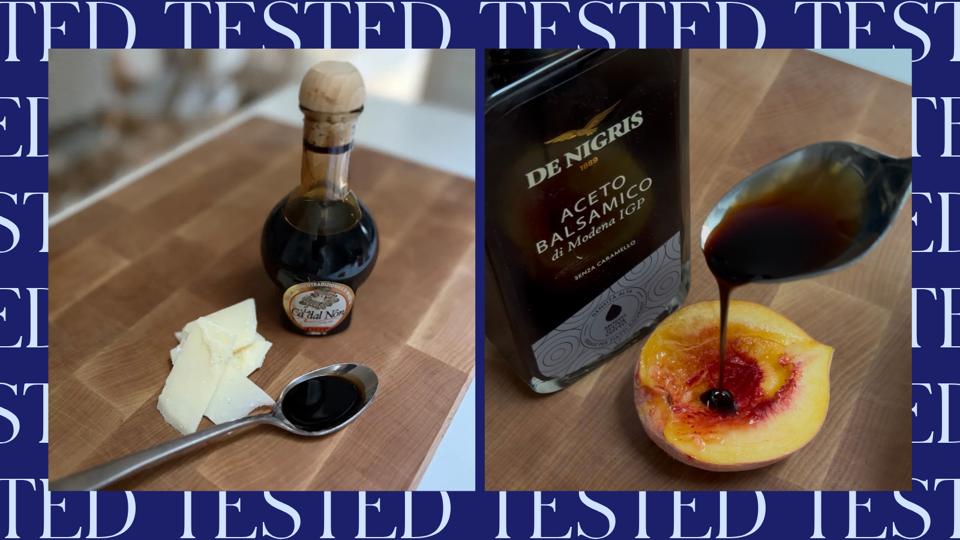
This traditional balsamic vinegar hits all the marks you’d expect from a bottle that’s gone through the rigorous DOP certification process. It has a thick, syrupy consistency and a complex flavor that evolves as you taste it. On its own, it delivered a delicious balance of sweetness and acidity that developed into rich, caramelized notes. Paired with Parmesan and, later, strawberries, it amplified the flavor of each without overpowering the saltiness of the cheese or the sweetness of the fruit.
Highly-Regulated DOP Certification
Traditional balsamics receive DOP (Protected Designation of Origin) certification, meaning they have gone through not only a lengthy production cycle but also a rigorous process to verify their authenticity. DOP balsamic vinegar is made exclusively in the Italian provinces of Modena and Reggio Emilia, two neighboring provinces in the Emilia-Romagna region, each governed by its own separate DOP certification. Grapes are crushed into juice, cooked slowly for hours, then aged in a series of wooden barrels, moving to a new one each year, for a minimum of 12 years. The result of this specific process is bottled with a DOP label and serial number, and inside is a thick, syrupy balsamic vinegar that delivers both sweetness and acidity to accentuate the flavors of your favorite cheeses, fruits and beyond. That’s exactly what La Cà dal Non’s Traditional Balsamic Vinegar delivers.
Why We Named It Best PGI Balsamic Vinegar
From its thick texture to its deep flavor, this balsamic held its own against the traditional bottles we tasted. Its aroma stood out in particular, amplifying the flavor and deepening both the vinegar’s sweetness and acidity without either fighting for attention.
We also appreciated that the ingredient list led with cooked grape must rather than wine vinegar, a sign of a higher-quality bottle since ingredients are listed by proportion and several other bottles we tested listed wine vinegar first.
PGI Certification: Why It Matters
PGI stands for Protected Geographical Indication (Indicazione Geografica Protetta in Italian). The designation means that at least one step of the production process happened in the Modena or Reggio Emilia region of Italy. These bottles age for a minimum of 60 days and, to speed up fermentation, include wine vinegar added to the grape must. PGI bottles are typically less expensive than DOP bottles and easier to find locally, but many, like De Nigris Balsamic Vinegar of Modena, still offer the balanced, delicious taste traditional balsamic is known for.
Why We Named It Best In-Store Balsamic Vinegar
This PGI-labeled balsamic vinegar delivered a lovely balance of sweetness and acidity, with the sweetness hitting first before its acidic notes developed underneath, something our tester called "quite lovely." What stood out was how consistent those flavors remained. Unlike some bottles that shift dramatically from first taste to finish, this one stayed balanced the entire way through. While we enjoyed this vinegar with fruit and cheese, the brand also suggests using it as a glaze for meats or adding it to pasta sauce for extra depth.
Grab A Bottle Same Day
While several of our recommendations require online ordering and shipping, Villa Manodori is available for same-day pickup at Sur La Table and Williams-Sonoma locations nationwide, so you can have a bottle in hand in time for dinner tonight.
Why We Named It Best Flavored Balsamic Vinegar
Creating a flavored balsamic vinegar that balances the complex taste of aged grape must with an added ingredient is a tricky line to walk, but Kosterina’s Fig Balsamic Vinegar does it beautifully. A drizzle in salad dressings, over cheese or, our favorite, on vanilla ice cream delivers the tangy richness of balsamic alongside the fruity sweetness of figs.
Why You Won’t Find A PGI or DOP Rating On This Balsamic
The production of balsamic vinegars that receive a DOP or PGI certification is highly regulated, but that doesn’t always mean that bottles without these designations are necessarily lower quality. Only specified ingredients are permitted under these standards, and added flavorings aren’t among them.
Why We Named It Best White Balsamic Vinegar
While thickness is key with dark balsamics, clarity is king with white, and Giuseppe Giusti’s White Balsamic Vinegar resembles water in both color and fluidity. On its own, we found it had a subtle initial sweetness that gradually gave way to more pronounced acidic notes. This balsamic particularly shone when mixed with a little olive oil and drizzled over greens, lending them a noticeable sweetness without overpowering their fresh flavor.
When To Consider Using A White Balsamic
White balsamics are particularly useful when making dishes where you don’t want the deep brown color of regular balsamic vinegar to tint other ingredients. Lycopolus says she reaches for white balsamic when cooking fish or chicken or glazing vegetables. “I don’t necessarily want it brown,” she says, and we tend to agree.
Other Balsamic Vinegars We Tested
- : This PGI-labeled bottle delivered a solid, mid-tier performance in our testing. It had a thick viscosity and a pleasant progression from sweet to acidic, though its sweetness often competed with the fruit in our testing.
- : We tested Kirkland’s PGI-labeled bottle, which is conveniently available at Costco warehouses nationwide. It was noticeably thinner than our higher-performing bottles and had a sharper flavor profile that didn’t evolve as well as other balsamics we tried.
- : This white balsamic has a deliciously sweet flavor, but its ingredient list includes added sugar. We prioritized bottles with simpler ingredient lists in our testing. However, if you prefer a sweeter balsamic and don’t mind the added sugar, this is a great option to consider.
How We Tested The Best Balsamic Vinegars
We put each of the balsamic vinegars through the same testing process in our kitchens, evaluating texture, taste, versatility and performance across a variety of uses.
- We researched a wide range of balsamic vinegars, evaluating categories, ingredients, accessibility and overall value.
- We consulted with a recipe developer, cookbook author and balsamic vinegar expert for guidance on what to look for when evaluating the condiment, drawing on that expertise to inform our recommendations.
- We put more than a dozen balsamic vinegars through hands-on testing, tasting each on its own and paired with a range of flavor combinations to see how they performed in real-world use. Our testing criteria included texture, acidity-to-sweetness balance, depth, aroma complexity, finish length and versatility.
What To Consider When Shopping For Balsamic Vinegar
Category
One of the first things to consider when looking for a balsamic vinegar is the category on the bottle: DOP, PGI or Condimento.
Bottles labeled DOP have gone through the highest levels of regulation. They are made in Modena or Reggio Emilia, Italy, and are made entirely from cooked local grape must. No wine vinegar should appear on the label of a DOP. The vinegar goes through an aging process for at least 12 years, being moved routinely into a new barrel, before it is judged to verify authenticity. DOP balsamic comes in two tiers based on age: Affinato, aged a minimum of 12 years, and Extra Vecchio, aged a minimum of 25 years.
“If you’re looking for a high-quality balsamic, always look for the DOP,” Emily Lycopolus tells Forbes Vetted, advising that buyers look for the red seal with a serial number on the bottle. “It’s your best bet that it’s actually balsamic vinegar from Modena.”
PGI is considered the next step down from DOP bottles. For these balsamics, only one step of the process has to happen in the Modena or Reggio Emilia region. They only need to age a minimum of 60 days in large wooden vats. These bottles will also have an additional ingredient listed, wine vinegar, to move the fermentation process along more quickly.
The final category is Condimento. This is unregulated balsamic vinegar that doesn’t go through the same process as the other two categories. “It doesn’t mean it’s not good,” Lycopolus says. “It just means that it isn’t necessarily from Modena, going through their regulatory process.”
Ingredients
The ingredient list is incredibly important to review when evaluating a bottle of balsamic vinegar, but what you’re looking for will be determined by the category. For a DOP, the label should only list grape must. PGIs will list at least grape must and wine vinegar, although some will list caramel color as well. Condimentos, being unregulated, could include any number of ingredients.
“A lot of the vinegars that you find on the grocery store shelves are rectified grape must, wine vinegar and then often they have caramel color added, often they have gum added,” Lycopolus says. “So really checking the ingredients is incredibly important.”
Acidity
Lycopolus says she always looks for the acidity when evaluating a bottle of balsamic. “If you have a balsamic vinegar with an acidity of 4 or 5%, it’s going to be much sweeter,” she says. “You will have a very beautiful, rich balsamic vinegar on your hands.” However, if you notice an acidity level of 7 or 8%, it’s going to be a very thin and watery balsamic.
“If you want something in the 7 or 8%, buy wine vinegar, it’s cheaper,” Lycopolus says.
Those in the PGI category will have 6% acidity, while DOPs will be listed between 4.5 and 5%. Between DOP and PGI, DOP is the one you’ll find listed below 6%.
Why Trust Forbes Vetted
Our home and kitchen team is dedicated to researching and testing top-rated items in the kitchen, from the food we eat to the tools we cook with, to help guide our readers’ purchases.
- The author of this story, senior home and kitchen editor Amy Moran, spent months researching balsamic vinegar and testing various types in her own kitchen across a variety of applications. She has over a decade of experience in service journalism, specializing in home and kitchen content.
- Overseeing this article, deputy editor Rebekah Lowin, has extensive experience in lifestyle journalism, researching and reviewing home and kitchen products.
- We regularly revisit our guides to ensure our recommendations remain current and accurate as the product market evolves. This guide was last updated in August 2026.
Our Experts
, recipe developer and author of six cookbooks, including
Frequently Asked Questions (FAQs)