Whether it’s a lightweight layer to complement your summer bedding or a cozy accessory for daytime lounging, a cooling blanket is a must-have as hot temperatures loom. The best cooling blankets are made from moisture-wicking, breathable materials and some incorporate specialized technology to soothe those who run hot. After meticulous research and some in-person testing by our editors, we named our favorite eight cooling blankets below. This includes our best overall choice, the made from bamboo viscose, and our top value pick, the made partly from luxe Egyptian cotton.

Why We Named It Best Overall
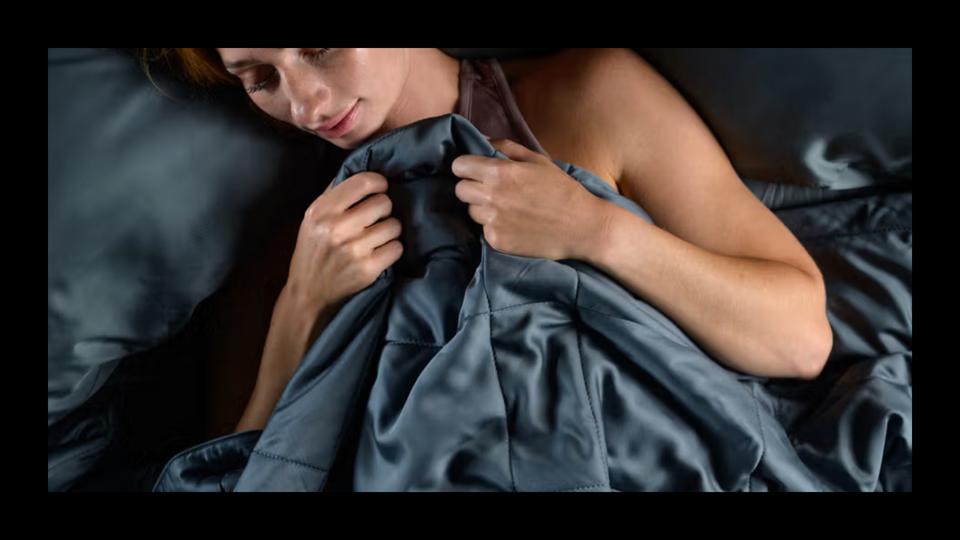
Both the cover and the fill of this luxurious, silky feeling blanket are made from viscose from bamboo, which offers temperature-regulating properties. This blanket not only has a slick and cool-to-the-touch sensation, but the fabric is soft, breathable and helps keep you cool all night. Hot sleepers can still appreciate the feel of cuddling under a quilted blanket, and the Luxome Lightweight blanket is a great bed topper, even during the toasty summer months. It comes in eight colors, has a sateen weave and gets softer every time you wash it.
Who May Not Like It
Viscose from bamboo is soft and cooling, but more susceptible to wrinkling and creases than cotton. As a result, the blanket may develop a lived-in look with regular use. There are also no throw or twin sizes available: only full/queen or king/California king.
Why We Named It Best Value
The Elegear Revolutionary Cooling Blanket is two-sided to keep you cool in the summer and warm in the winter. One side incorporates the company’s Arc-Chill 3.0 technology, which uses mica nylon and polyethylene. Along with providing a cool-to-the-touch sensation, these materials work together to absorb your body heat when you perspire and speed up moisture evaporation to keep you drier and more comfortable.
The other side of the blanket is made from Egyptian cotton, which offers a soft and cozy feel for times when you need warmth. The Elegear Revolutionary Cooling Blanket has a lightweight design and comes in 13 different colors and six sizes. You can also buy the brand’s to match it.
Who May Not Like It
The blanket’s care instructions suggest that you hang-dry only, which may be inconvenient for those unable to wait or with limited space.
Why We Named It Best Linen
Linen is naturally breathable and durable, which makes it a great material for high temperatures. The Smooth Linen Summer Cover from Rough Linen is so lightweight it practically floats above you while you sleep, while still providing comfort and wicking perspiration away. Like all linen, it imparts a low-maintenance, effortless aesthetic, allowing you to make the bed look made (even if a little rumpled) by simply draping it on top.
The Summer Cover is available in twin, queen and king and comes in six colors. Rough Linen also offers bedding and blankets in two other weights of linen, so if you prefer a denser weave or a little bit more heft, check out the , which is available in an array of vibrant hues. We especially appreciate that Rough Linen offers small sample swatches of each linen weight, so you can really check them out before purchasing.
Who May Not Like It
Similarly to bamboo, wrinkles are difficult to avoid even if you immediately pull the bedding from a dryer. And like all linen, expect it to shed lint until it’s been washed a few times.
Why We Named It Best Lightweight
The Sleep Number True Temp is a standout summer blanket for many sleepers, especially those who have sensitive skin that reacts to fuzzy fabrics. It has a very smooth and slick feel that doesn’t irritate, and it contains Sleep Number’s 37.5 particles that actively move heat and humidity away from your body while you sleep. It’s thin and lightweight, so it can be used on its own during hotter months and layered with other bedding to combat year-round night sweats. While pet owners should note that fur may cling to the fabric, stains wash out easily, even from the white shade.
“It’s cool to the touch but not soft or cozy, so I prefer this blanket layered on top of another rather than pulled up under my chin,” says Rose Sala, Forbes Vetted deputy editor. Editorial assistant Lee Cutlip also tested the blanket and adds, “It’s definitely more breathable than a knit blanket and is very cool against the skin,” and agrees with Sala that it’s best suited as an additional layer with other bedding.
Who May Not Like It
Note that both Sala and Cutlip report that the blanket requires extra drying time, and even after multiple dryer cycles, it has to be hung to fully dry. Also keep in mind you can only choose between queen or king sizes.
Why We Named It Best Cooling Comforter
The patented Slumber Cloud Outlast ClimaDry fiberfill, originally engineered by NASA, uses phase change materials that are designed to trap heat away from your body in microcapsules and only release it as the temperature cools. This not only keeps you cool and comfortable, but it can also provide relief to anyone who co-sleeps with a partner who runs hot. While it feels fluffier and heavier than a lightweight blanket, it provides the sensation of being covered up without being stifling.
Senior mattress and sleep editor Bridget Chapman tested the lightweight model of the UltraCool Comforter and says, “This comforter is noticeably cooling the second you take it out of the box. It’s quite thin and could pass as a thick blanket. I actually got too cold the first night I slept with it and had to add more blankets after that. I found the cooling technology to really work all night." It’s available in three colors, and you can also use it as a duvet insert, as it has handy corner loops to attach it to a duvet cover.
Who May Not Like It
Unlike several other blankets we recommend in our roundup, this doesn’t come backed by a health certification like Oeko-Tex Standard 100, which verifies the product is made without harmful chemicals or substances. That isn’t to say the product is dangerous, but it doesn’t meet stringent standards required for the safety seal.
Why We Named It Best Cooling Weighed Blanket
Many people love the hugging feel of a weighted blanket and find it calming. This weighted option from Gravity drapes over you, exerting a gentle pressure while you sleep, promoting relation and comfort. Some weighted blankets are meant to keep you cozy and warm, but the Gravity is made of 100% lyocell fabric derived from eucalyptus, which is temperature regulating and has a cool, silky feel. The blanket also comes with a removable and washable cool-to-the-touch cover, which can be secured with ties and zippers. Choose between three weights: 15 pounds, 25 pounds or 35 pounds.
Mattress and sleep editor McKenzie Dillon says, “It’s soft and fuzzy to the touch without being too warm, a balancing act that’s hard to achieve.” Another Forbes Vetted tester says, “I love that the blanket fabric is made of 100% lyocell, which feels smooth and cool to the touch. It helps keep you cozy, while the lyocell fabric helps regulate your body temperature so you don’t roast.”
Who May Not Like It
The Gravity Weighted Blanket may be too heavy and unsafe for young children. As a rule of thumb, your blanket should be around 10% of your body weight.
Why We Named It Best Cotton
If you’re a hot sleeper who prefers the cozy, enveloping feel of cotton, we recommend the Brooklinen Dreamweave Waffle Blanket. Instead of using advanced cooling tech like phase-change materials, this blanket takes a simpler approach to comfort with an airy, waffle-weave design and 100% Turkish cotton composition. Unlike the and the , this option from Brooklinen feels more soft than silky-smooth.
“I love my Dreamweave blanket,” says mattress and sleep editor McKenzie Dillon. “I keep it on my spare bed as an alternative layer for guests when the comforter and duvet cover feel too substantial, but also as an accent for color and texture.” Although it feels more weighty than your average throw blanket, she says its chunky weave promotes plenty of airflow.
Who May Not Like It
Extremely hot sleepers may prefer a pick that’s more silky-smooth and cool to the touch, as opposed to a soft and substantial blanket made from cotton. There are also no safety or health certifications to provide insight on how it’s manufactured.
Why We Named It Best Quilt
Complete with a premium quilt and two pillow shams, the Eucalyptus Pintuck Quilt Set utilizes silky lyocell that’s grown in Austria to achieve a cooling feel. The blanket also has a buttery sateen weave with a 300-thread count, an ideal figure that strikes a balance between high quality and breathability. The quilt can be used as an additional layer on your mattress for comfort and texture, or alone for a more weightless feel. I like to fold mine across the bottom of my mattress to enhance my bedding’s style, as it drapes over the edges and looks more polished than my . I’m a very hot sleeper and can see myself using it as an alternative to my comforter as summer creeps closer.
Who May Not Like It
There is no throw size available for those who want a mobile cooling blanket that’s easy to snuggle up to on the couch.
How We Chose The Best Cooling Blankets
In order to select the best cooling blankets, we relied on the firsthand testing experience of Forbes Vetted staff, the expertise of our sleep editors and the professional insights of our expert.
- When possible, we were guided by the hands-on testing and experience that Forbes Vetted editors have with the products.
- Our sleep editors relied on their deep knowledge of bedding materials and construction, as well as many trusted brands, to guide selections.
- We leaned on the expertise provided by Dr. Elizabeth Easter, textile consultant and professor at the University of Kentucky, who offered insight on materials that are proven to promote cooling and moisture-wicking capabilities.
- We consulted consumer reviews in order to ensure that buyer experience aligned with our own experiences and recommendations. We only recommend products with a majority of positive reviews.
What To Consider When Shopping For The Best Cooling Blankets
While every sleeper is different, there are various factors to consider while shopping for a cooling blanket. No matter what your needs are, knowing a bit about fabrics, weights and cooling technologies can guide your selection.
Materials
According to Dr. Elizabeth Easter, textile consultant and professor at the University of Kentucky, cooling blankets “primarily work by allowing perspiration to pass from the hot sleeper to the fiber, fabric or treatment.” However, the way they do this varies depending on the type of material the blanket is made from. Some bedding materials naturally have more cooling properties than others. Also, some synthetic and manufactured fabrics provide excellent temperature regulation.
One key characteristic to look for is a fabric’s breathability. According to Easter, this means that “the fabric or product allows perspiration—in the form of a vapor—to pass through it and reduces or prevents perspiration from converting to a liquid—sweat.” Easter further claims that “this can be achieved by fiber content, as with cotton or linen; fabric construction; thickness and weight; and treatments.”
Another term used to describe cooling materials is “moisture wicking.” Easter explains that doesn’t mean that you don’t perspire, but that “the fiber or yarn moves the sweat or liquid to the outer surface to allow evaporation and promote quick drying.” These are some materials to look for when searching for cooling blanket fabrics.
- Linen: “Linen is our oldest breathable fabric," Easter says. “It allows perspiration to pass through, but also has the potential to absorb sweat.” While it comes in various weights, they all have enough of an airy weave to ensure the fabric doesn’t smother you or trap heat under the covers. Note that it can be expensive, tricky to launder and may always look slightly crumpled and casual.
- Cotton: Cotton is one of the most common fabrics to encounter. It’s very light and well-suited for those who sleep hot. Note that if you experience night sweats, while cotton pulls that liquid away from your skin, it doesn’t dry quickly. Easter says, “Cotton is breathable, but it also absorbs sweat and…[it] can cling to the body.” Luckily, as Easter points out, “Cotton’s launderability is not a problem,” as it’s easy to wash and dry at home. For the best experience, look for high-quality, long-staple cotton, which is usually called “Egyptian” or “Supima” cotton.
- Wool: “Wool is breathable and absorbent, so it can be considered a cooling fiber,” according to Easter. “However, some consumers do not like the feel or touch of wool,” and you’re unlikely to find it in a summer blanket. If you experience night sweats no matter the weather, you may want to use a blanket that incorporates wool in the colder months.
- Polyester: Polyester is an affordable synthetic fiber and isn’t absorbent. But, Easter says, “It can wick moisture and move it to the outside environment, hence cooling and quick drying.” However, while a polyester fabric can feel cooling in bedding, if it’s included in a comforter’s fill, it can trap heat inside.
- Rayon, viscose, lyocell, Tencel: These fabrics are all manufactured from the bamboo plant. According to Easter, since they are made of cellulose, “They are absorbent fibers.” Note that is a trademark for a type of lyocell.
Cooling Technologies
Some fabrics excel at temperature regulation not due to any natural qualities, but because they have been designed to do so, with cooling technology incorporated into the material.
- 37.5: This is named after what is widely considered the normal ideal body temperature, in Celsius. Easter says, “ uses cooling particles, embedded in polyester fibers, that absorb moisture.” It’s made with volcanic minerals that capture heat and humidity and speed up evaporation.
- Arc-Chill 3.0: This Japanese technology is made with jade particles to absorb and dissipate heat faster than cotton, reducing body surface temperature.
- Outlast: “ uses phase change materials, which are micro-encapsulated natural waxes that can absorb heat and moisture and store them within the fiber or fabric,” Easter says. It’s one of the most common cooling technologies.
Weight
For most hot sleepers in search of a cooling blanket, a lighter weight is typically the preferred choice, as lightweight blankets promote greater airflow and breathability.
However, if you’re looking for something both breathable and calming, weighted cooling blankets do exist. With a weighted blanket, the materials determine how cool or hot it sleeps. Look for cooling materials like Tencel lyocell and cotton.
Why Trust Forbes Vetted
The Forbes Vetted sleep team has a combined decade of experience testing all sorts of cooling mattresses and bedding, including the best cooling sheets and comforters for hot sleepers. These guides are some of the many roundups in our robust library of sleep, mattress and bedding stories that have been published as an extension of our extensive research and testing.
- Christine Colby, the author of this article, is an experienced product tester and reviewer with more than a decade of journalism experience. She’s recently covered the best pillow top mattresses and tested and reviewed the Titan Plus Luxe mattress for Forbes Vetted.
- Mattress and sleep editors Bridget Chapman and McKenzie Dillon, who oversee this article, have extensive experience testing mattress and bedding products, including the best cooling mattresses. Their expertise includes knowledge of bedding fabrics and their properties and benefits.
- We regularly revisit our content to ensure it remains accurate and relevant. This article was updated in May 2026 by Dillon, who added the HiEnd Accents Eucalyptus Pintuck set as the best cooling quilt and refreshed product information.
Meet The Experts
- We interviewed , a textile consultant and professor at the University of Kentucky, for this guide. Easter provided further details into the materials and cooling technologies in summer blankets.