Carrying an iPhone as your main device feels like a seamless experience more than ever: They offer handy Apple Intelligence integrations for answering questions on the go, feature all-day battery life and easily connect with all of Apple’s popular gear, including AirPods, MacBooks, iPads and more. After spending over two years testing each of the latest iPhones as they hit the market and as the consumer tech editor here at Forbes Vetted where I’m the resident smartphone tester, I believe the best iPhone you can buy right now is the . It’s a powerful device with lovely cameras, and it can last all day—and more if you need it to—on a single charge.
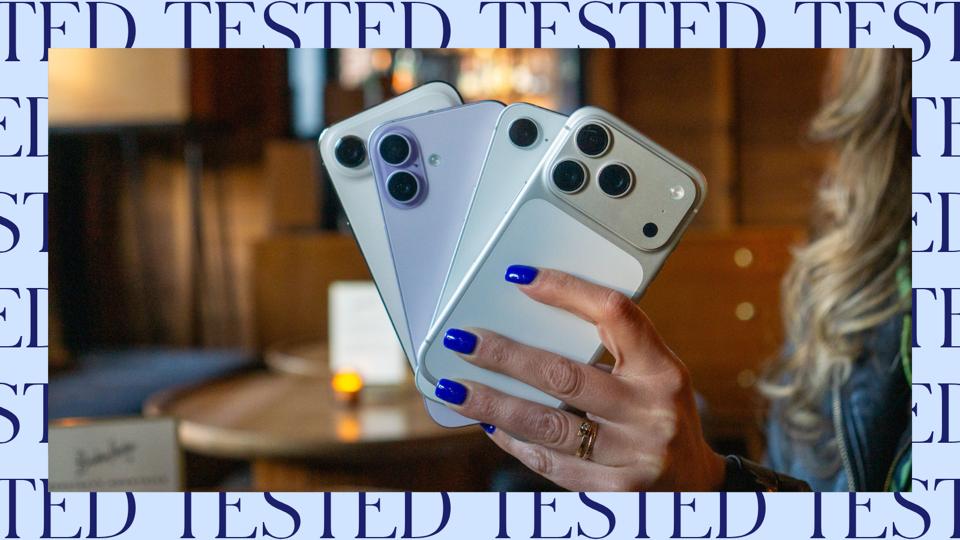
But if the iPhone 17 doesn’t quite suit your needs, you have plenty of models from which to choose. For example, the offers everything a content creator or heavy multitaskers needs. For those seeking an entry-level iPhone, the does the job wonderfully albeit with fewer upgrades than the current 17 series. While I began testing iPhones about two years ago, I spent significant time this fall testing the tech giant’s latest models, which were released in September at its "Awe Dropping" event. I considered processing power, battery life, camera quality and more during testing. Below, find my picks for the best iPhones available in 2025 based on my rigorous testing.

The best iPhone for most people this year is the , which may come as a surprise to some. Historically, the iPhone Pro Max was the iPhone to buy for its combination of power and size. However, I’m enamored with its smaller 6.3-inch display and betting that others are too. It’s comfortable to hold in my hand when I’m answering emails or scrolling socials. The thinner bezels feel close to a near-infinity display; they allow for more screen real estate, and the 120Hz refresh rate smooths scrolling and video playback. It also gets nice and bright in sunlight—up to 3,000 nits, so it’s built for bright, sunny afternoons. The aluminum frame and the Ceramic Shield 2 glass combination feels durable and survived multiple accidents, too.
Impressive Camera Upgrades Include Intuitive Software
This year, the new iPhone 17 offers two lenses that help cement it as my top pick: a 48 megapixel Fusion main camera, and a 48MP Fusion ultrawide camera lens. Together, they make for a powerful pairing to capture images that will be good enough for most users. Camera Control, originally reserved for the Pro line, now comes to this base model— a welcome change. This update makes it easy to adjust and snap pictures on the fly. Center Stage, allows you to take portrait shots while holding the phone in landscape mode, which is another nice addition. I find I have a better grip on the iPhone when I hold it in that orientation. These phone photos come out detailed and colorful, and that’s partially thanks to Apple’s post-processing, which focuses on realistic renderings over color saturation.
Battery life is also really good on the iPhone 17, and can last all day on a single charge—and more if you tend to use your camera less. Another good change this year is that the phone starts with 256GB of data, which is great for storing all your photos, apps and documents, or you can purchase it with 512GB if necessary. I also tested the Apple A19 Bionic processor using Geekbench 6, which is a software that stress tests the processor; the higher the number, the more powerful the processor is. The numbers reflected a softer result that I would have liked, but ultimately, I found this processor was responsive enough for most needs. If you’re a mobile gamer, consider opting for the Pro series, but if you casually game on your phone, this one is perfect.
The 2026 Forbes Vetted Best Product Awards are here: Explore our 150 top-recommended items across categories after extensive research and testing.
If you’re seeking out an iPhone for its strong features but have a little less to spend, I’m happy to recommend the . It’s a sleek 6.1-inch model that sports a Super Retina Display. That display technology does not use ProMotion, which is a technology that makes the screen look smoother, and it doesn’t offer the Always On Display or Dynamic Island. The aluminum frame still offers the programmable Action button, too, and while this one is bulkier than the iPhone 17 models I tested, I felt it was pretty lightweight. It could be just right for a teen, young professional or anyone who doesn’t need their phone to be quite so robust.
While the A18 chip in this phone is technically from 2024, it’s still responsive enough for most needs. Casual mobile gamers might enjoy that it offers ray tracing for enhancing gameplay shadows and lighting, especially for first-person shooters. Keep in mind that because it lacks the ProMotion technology, it won’t be as smooth, but it’s still good enough for mobile games. For those who need a little extra storage, this iPhone comes with three storage options, including 512GB.
No Ultrawide Lens On This Model
The 48MP Main Fusion camera may be the only rear camera on the device, but it takes impressive photographs. It doesn’t offer an ultrawide lens, but I found during my camera testing that Apple’s post-processing is perfectly suitable for socials. To nail this price point, though, Apple also didn’t include Camera Control. After using it for over a year, I found I missed this feature. If you’re coming from an iPhone 15 or older, you won’t notice it’s missing, though.
The was a long-suspected launch at Apple’s fall event. The thinnest Apple phone to date is only 5.6mm thick and weighs an astonishing 165 grams, or 5.8 ounces, and it feels much lighter than its siblings in my hand. It sports an elongated camera plateau on the back, which gives it a distinctive look; you will know exactly who is carrying the iPhone Air. It has a 6.5-inch display that includes the ProMotion technology and Dynamic Island, so this screen is on par with the rest of the 17 lineup. Because the A19 chipset is the same in this device as the iPhone 17, you can expect similar processing power.
One Main Fusion Camera Keeps It Lightweight
The new Air iPhone only has one 48MP Main Fusion camera—and carries one of the series’ largest price tags. While the base iPhone 17 also sports only one camera lens that combines the ultrawide and the main lens, it performs slightly better than the Air. This thin phone also lacks a telephoto lens for portrait shots.
If there’s one gripe about this phone, it’s the battery life. To reduce thickness, Apple had to reduce the battery under the hood, and thus the battery life. Like Samsung before it with the brand’s Samsung Galaxy S25 Edge, the Apple iPhone Air does lose precious battery life. If you aren’t glued to your iPhone all day, you can safely expect to get a full day’s use. However, if you’re a power user, opt for another iPhone, or plan to invest in the . Keep in mind that accessory will negate the lightness and thinness that makes the iPhone Air so appealing.
The feels like an absolute workhorse of a device—a very sleek and full-featured one. In previous years, the Pro lineup used a titanium shell; this year, it sports a heat-formed unibody aluminum shell that feels lovely to hold. That aluminum comes into play later. I’m mixed on the design change, which sees a new camera plateau on the back, as I loved Apple’s signature, more streamlined look. It hasn’t fully grown on me, but one thing I’m enamored with is the Ceramic Shield 2 on the front display. It’s scratch resistant, and after a couple drops, feels like it holds up well to accidents. (It’s also coated on the back, too.)
Impressive And Robust Cameras Lead To Stunning Shots
But really, if you’re a content creator or anyone who values the best cameras in their iPhone, I recommend you skip the rest of the iPhones—and just get this. Upgrades to the 48MP cameras, including a larger sensor and improved tetraprism lens for longer focal length and thus improved zoom features, makes the iPhone 17 Pro a powerful asset for photography and videography. Colors look rich, details look excellent, and you get special ProRAW and ProResRAW software for more editing power after you capture the image or video, which is essential for photographers and videographers. The telephoto lens is also reserved for the Pro line, and if you like to experiment with portraiture, it’s a must-have. The cameras also film with enhanced Dolby Vision for capturing smoother and more vivid, detailed visuals, too.
For those seeking even more display size, consider the , which is the same phone but with a larger 6.9-inch display.
The Most Powerful And Impressive iPhone, I Tested
Apple wants you to use this as your gaming device, and while it does get warm, it’s not nearly as toasty as the other iPhones I tested. For heavy gamers, the battery life ekes out another three hours. The aluminum build, combined with the vapor chamber, are built with gaming thermals in mind.
All this power comes at a cost: This was the most expensive iPhone I tested—and the most powerful. If you’re not downloading the latest AAA gaming titles from the App Store, and it you’re not planning on using every single photography tool this device offers, I think it’s overkill. I don’t believe most iPhone buyers need to splash out for this phone.
How I Tested The Best iPhones
Because most of my picks here just launched at the 2025 Apple fall event, I spent over a month with these iPhones, including the iPhone 17, the iPhone 17 Pro and the iPhone Air. Additionally, I’ve spent several months long-term testing the Apple iPhone 16e, Apple’s budget smartphone.
- I researched the latest iPhone trends and considered what buyers were looking for in their next device. I reviewed each devices’ hardware and software offerings, taking into account everyday, casual users to serious fans of the brand.
- I put each to the test. For the processors, I ran Geekbench 6 on each iPhone and recorded the single-core and multi-core scores. The higher the scores, the more powerful the processor.
- Because there were plenty of camera upgrades this year, I snapped photos to double-check the camera quality. I also reviewed the different software features each iPhone offered.
- I also consulted experts to make sure my testing considered what others prefer in their iPhone and smartphones.
How To Choose The Best iPhone For Your Needs
If you’ve finally decided to upgrade your iPhone, there are a few features you should consider before investing in your next device. After testing all the latest iPhones, here’s what I recommend considering before your purchase.
Performance
If you plan to run applications like ChatGPT or Siri regularly, then a powerful processor is everything. The good news is that all of the chips Apple offers this year are pretty powerful, according to Mircea Dima, the CEO and founder of AlgoCademy, which offers coding instruction. “The iPhone 17 models are powered by the A19 chip, which ensures the speed does not slow down even when heavy applications are being used,” he says. That said, during my benchmarking, I noted that the A19 Pro processors of the iPhone Pro series reflected higher scores. If you plan to use the heaviest applications, I recommend opting for the Pro series. If you plan to browse socials and snap photos, opt for the regular base iPhone 17 or the iPhone Air.
Cameras
Most iPhone cameras are excellent. That said, if you are a photographer or a videographer, you’ll want to splurge more for the Pro lineup. “The Pro and Pro Max editions are aimed at those who capture content or require images and videos on the pro level,” says Dima. “The bigger sensors and improved image processing provides a clear increase in detail and low-light quality.”
But for more casual users, Athwal recommends the base iPhone 17 and the iPhone 16e. “The camera quality of the standard base models is perfect. The dual-lens produces smooth 4k videos, crisp portraits and vibrant photos, which is everything an everyday user could require,” he says. For those who want a balance of budget and performance, the iPhone 16e suits just fine, too. “The iPhone 16e is perfect for casual photography, and those just wanting a compact camera on a budget,” he adds.
Battery Life
The worst feeling when using any phone is seeing the dreaded low battery notification. An iPhone should last you all day with mixed use. If battery life isn’t a total priority, the iPhone Air might suit you, while most find that the iPhone 17’s battery life is the sweet spot, according to Dima. “An ordinary iPhone 17 or iPhone Air provides good performance and battery life at a cheaper cost than the pricier version,” he says.
Why Trust Forbes Vetted
The Forbes Vetted team has published hundreds of tech and electronics guides that leverage our hands-on testing and research.
- Author Rebecca Isaacs has been involved in tech journalism for more than six years and is the Forbes Vetted consumer tech and electronics editor. She has done deep dives into the Apple ecosystem and reviewed its laptops, headphones and phones like the iPhone 16 Pro. She also recently tested and reviewed the best Samsung phones. She regularly attends tech events, including CES.
- Isaacs has been testing iPhones for several years. For this story, she started testing Apple iPhones in September 2023 and rigorously tested each new model, often for months, as they were released.
- As she tests iPhones, Isaacs focuses on aspects of interest to everyone, from those who prefer a simple call-and-text device to heavy mobile gamers who want a powerful and seamless experience. As a result, her testing is relevant to how general users, gamers and content creators may interact with an iPhone.
- To gain further insights to iPhones, Isaacs also tapped unbiased experts to learn more about these devices. In particular, she spoke with Mircea Dima, the CEO and founder of , and Steven Athwal, CEO and founder of the UK-based refurbished tech retailer .
- Deputy editor Rose Gordon Sala edited this story and is a longtime iPhone user, dating back to about 2010. She’s also a longtime journalist and currently oversees the consumer tech, gear and kids and baby gear sections at Forbes Vetted.