For years, I stubbornly held on to the belief that a running vest was the ultimate means of storage, with enough room for fuel, fluids, extra layers and assorted tech. But as I would learn, the best running belts can actually store a lot of the same essentials, with the added benefit of taking the load off your back. As a runner who loves a long, slow slog, I tried a few belts and also asked fellow runners for their recommendations before naming the the top option for most people. It pairs comfortable, breathable materials with spacious pockets and a secure fit to keep everything you need within reach.

Why We Named It Best Overall
Naked’s original Running Band sets the standard among running belts. With four primary pockets that deliver over 1L of storage space, it’s no trouble to pack a smartphone, fuel and just about any size hydration flask—Naked claims the belt can comfortably store up to three 500ml soft flasks, which is more than enough for most runs. Around the back, two thick loops secure trekking poles, while smaller attachment points on the front keep your race bib properly positioned.
What I appreciate most about Naked’s approach is the wide range of sizes, with 12 options to choose from (ranging from 28 inches to 39 inches). Because a running belt sits on your waist, the right size does make the difference between a belt that’s secure and one that flops around. When you pair its stretchy, breathable materials with plenty of pockets and the right fit, you’re left with a running belt that’s ready to support just about any effort, from the tarmac to the trail.
Who Shouldn’t Buy It
It’s surprisingly hard to find fault with this running belt—Naked nailed the design from front to back. But if I had to nitpick, the belt has a lack of padding across the back that could help protect against hard objects, like a flask’s plastic top. Durability might come into question as well if you truly put this belt through its paces, but most reports suggest it holds up incredibly well to regular use.
Why We Named It Best Value
The SPIbelt ("Small Personal Item belt") is as simple and straightforward as a running belt gets. With one zippered pocket that’s big enough to fit a full-size smartphone, a few cards and a key, it’s a useful storage solution when you’d rather not stuff everything in your shorts or pants. The elastic belt can be adjusted to find the right fit, and a (sold separately) offers even more room if need be. Though running belt designs have evolved over the years, the SPIbelt keeps things simple, and at less than $30, it’s an excellent value if you’re after a minimalist design.
Who Shouldn’t Buy It
The SPIbelt’s simplicity is both a strength and a weakness. While some runners appreciate that it holds only those essential items, others may want more storage and a more comfortable design for long runs. Really, it’s a great option for the casual runner or for sub-10k efforts, but it doesn’t hold a flame to larger belts with more storage, like the and the .
Why We Named It Best For Trail Running
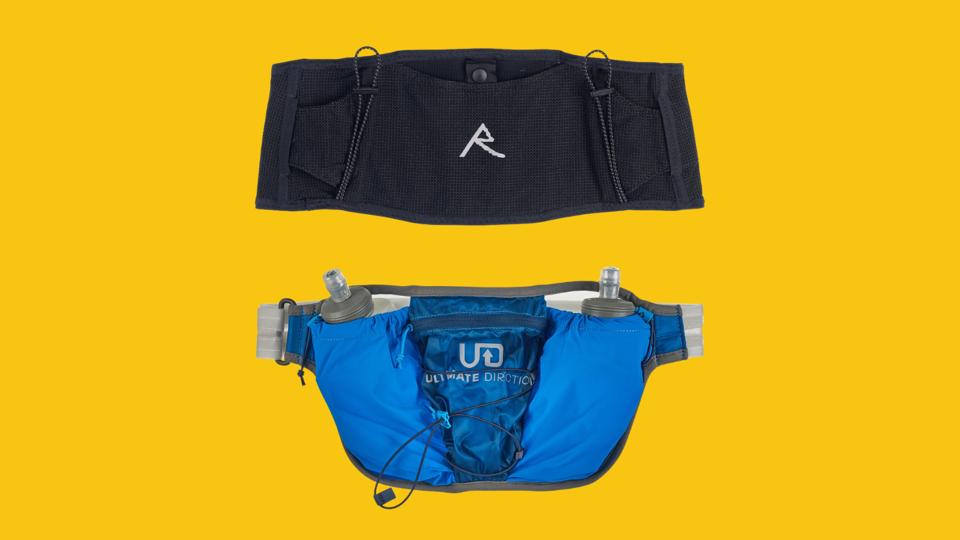
I started running with Raide’s LF 2L belt earlier this year, and it didn’t take long for it to replace my running vest on all but the longest trail runs. That’s because the design comfortably holds almost everything I need for the trail, from a soft 650ml flask (included with the belt) to a phone, fuel, layers and more. I’m also a big fan of the cinching straps on the back that secure a set of trekking poles or an ice axe, and the small strip of foam that prevents any body heat from warming up a flask.
What makes this belt truly great for the trail, however, is the blend of durable materials that make it bombproof. In addition to nylon and Lycra, it contains UHMWPE (ultra-high-molecular-weight polyethylene), a material that’s praised for its lightweight durability and high impact strength. That means rocks, trees and the occasional spill don’t lead to the belt’s demise, and Raide offers a strong five-year warranty for good measure. While it may not replace a running vest on truly long runs or fast-and-light hikes, when you want a bit more gear, it supports most outings beyond the beaten path.
Who Shouldn’t Buy It
The LF 2L, while durable and well-appointed, is expensive—it costs about as much as a full-size running vest that offers much more storage space. And while it comes in sizes ranging from XS to XL, the materials take some time to break in and feel comfortable. In fact, I was instructed to put the belt around my knees and pull it apart to loosen up the fabric. Meanwhile, a belt like the is stretchy and accommodating out of the box. At the end of the day, it’s a more premium option as far as running belts go, and it’s priced accordingly.
Why We Named It Best For Hydration
While most running belts can accommodate a soft flask or two, Ultimate Direction’s Ultra Belt features deep, dedicated pockets for 500ml flasks, allowing you to comfortably carry up to 1L of fluid. Sandwiched in-between those hydration pockets is a zippered pocket for snacks, a headlamp or whatever else you might need. I also appreciate the bungee strap across the back that secures an extra layer.
The belt comes with an adjustable waistband that contains a small slip-in pocket for a key, and the fabric is weather-resistant to protect everything from the elements. Truth be told, there are other running belts that can hold more fluids—Naked claims its Original Band can store 1.5L of fluid—but I much prefer a belt that holds slightly less if it means I’m more comfortable and I think that’s a tradeoff most runners are willing to make.
Who Shouldn’t Buy It
The Ultra Belt prioritizes space for fluids, which means you have to be selective when the time comes to pack other items. I’m also not a big fan of the adjustable belt because it uses Velcro, which tends to lose its grip over time, especially if it’s exposed to dirt and grime. Still, Ultimate Direction is well-known for its build quality, and its products receive a lifetime warranty against manufacturing defects in materials and workmanship.
How We Chose The Best Running Belts
A comfortable running belt with proper storage can dramatically impact your runs. To find the best running belts, we considered a handful of key factors, including stability, storage capacity, fit and overall comfort.
- Stability: A running belt that moves around, bounces or rides up ends up in a drawer because, frankly, you won’t want to use it. We looked for belts that stay in place and don’t require constant readjusting.
- Storage capacity: We prioritized belts with enough room for those long-run essentials, like a phone, headlamp, fuel, fluids and an extra layer. Additionally, the pockets should be easy to access on the move, ensuring your run isn’t interrupted when you need something.
- Fit: Unlike running vests, running belts pair with body shape in a way that makes the fit more personal. We paid attention to size ranges, adjustment options and whether or not each belt accommodates different body types without sacrificing stability or comfort.
- Comfort: A belt can stay in place and still feel uncomfortable after an hour of movement. We looked for breathable, durable materials that don’t trap heat or cause chafing, because even slight irritation can become a big problem as the miles add up.
How To Shop For A Running Belt
- Stability: Running belts don’t always stay in place once you’re actually on the move. Before buying one, see if it comes in multiple sizes or has an adjustment mechanism, and look for reviews that cite if and how the stability changes over the course of a run. There’s nothing worse than a running belt that becomes loose once you’re tired and looking for reasons to stop.
- Storage: Consider what you need to carry on your longest, most demanding runs, then find a belt that handles that load. A belt with multiple pockets and cinching loops should serve you better than one with a single large pocket, especially if you need access to different items.
- Fit: Running belts are size-dependent, and a belt that fits perfectly on one body type can bounce or ride up on another. Look for styles with a wide size range or adjustability that makes it easier to fit the belt to your body.
- Materials: If you run in warm weather or tend to run hot, a belt’s fabric can significantly impact how comfortable it is. Mesh panels, moisture-wicking materials and flat seams spell the difference between a belt you forget you’re wearing and one you can’t stop thinking about.
Why Trust Forbes Vetted
The Forbes Vetted gear team writes dozens of equipment and apparel guides each year, many of which cover the latest and greatest running gear.
- Author of this guide and Forbes Vetted gear editor Cam Vigliotta has reviewed outdoor gear and apparel for over six years. As an avid runner, he dedicates time to evaluating the latest running gear every week, logging miles in shoes, shorts, shirts, hats, vests and belts.
- We regularly revisit and update this guide to review our recommendations and add information as needed. It was first published in April 2026.