There’s a longstanding joke that says a treadmill is destined to become an expensive clothes rack, but it doesn’t have to be that way. Whether you’re setting yourself up for a healthier year or finding a way to workout spring weather, the right treadmill spells the difference between investment and excess equipment. To that end, we’ve compiled a list of the best treadmills for home based on feedback and testing results, naming the the best option for most people—it blends a reasonable sticker price with great features. And yet, it’s just one of seven treadmills we recommend in 2026.
In addition to the 1750, we recommend six other treadmills that each scored high marks for quality, features and price. Our testing involved walking and running on dozens of models and analyzing each treadmill’s motor power, overall durability, ergonomics and running surface, in addition to a few other features. Below, find the seven best treadmills that passed our tests with flying colors.
Why We Picked It
The combines a sturdy build, comfortable deck, useful technology and powerful-yet-quiet motor to rival true commercial models found in gyms. The range of inclines also adds a “real road”-like feel that simulates hilly terrain with its incline variability; the machine can go from a 12% grade to a -3% decline (a rare and notable feature), mimicking a more realistic running experience. No other treadmill on this list matches or bests this incline variety other than the , which can go from 15% to -5% decline.
This NordicTrack treadmill has entertainment features we actually wanted to use, too: The touchscreen display swivels, allowing us to utilize the built-in iFIT workouts even when we stepped off the treadmill for some strength training or stretching. And the variety in the iFIT workouts caters to everyone—from beginners to elite runners—while the Google Maps street-view integration is a fantastic touch for an immersive experience.
Who It’s Best For
As an athlete who spends hours each week running and walking on treadmills, we can confidently say that if you’re a serious competitor who logs a lot of miles—or a more casual gym goer who wants a high-quality machine that will last—you’ll appreciate the .
We also love its wide belt and generous running deck, which accommodates even the longest strides—this makes it a great option for both average-height and tall runners. Though it is admittedly large, it’s also foldable when not in use and uses hydraulics to assist (luckily so, because this machine weighs over 300 pounds).
Who Shouldn’t Buy It
If you can get by without the fitness classes and technology, it might be worth saving money on a model like the , which offers similar power and incline figures. Likewise, the is also less expensive and shares a few of the same qualities as the 1750 in terms of foldability and iFIT technology, though its motor has a slightly less powerful 3.0 CHP.
The 2025 Forbes Vetted Best Product Awards are here: Explore our 150 top-recommended items across categories after extensive research and testing.
Why We Picked It
The packs in a ton of value for its under-$1,000 price tag. The hydraulic lift allows you to fold the machine in half when it’s not in use—a feature you won’t often find at this price point, and one we really appreciate. The feel of the treadmill is comfortable, too; our tester found that our footfalls landed solidly on the flexible and appropriately cushioned deck, which measures a roomy 20 x 60 inches. This ample size is bested only by much more expensive models on this list, like the and .
Who It’s Best For
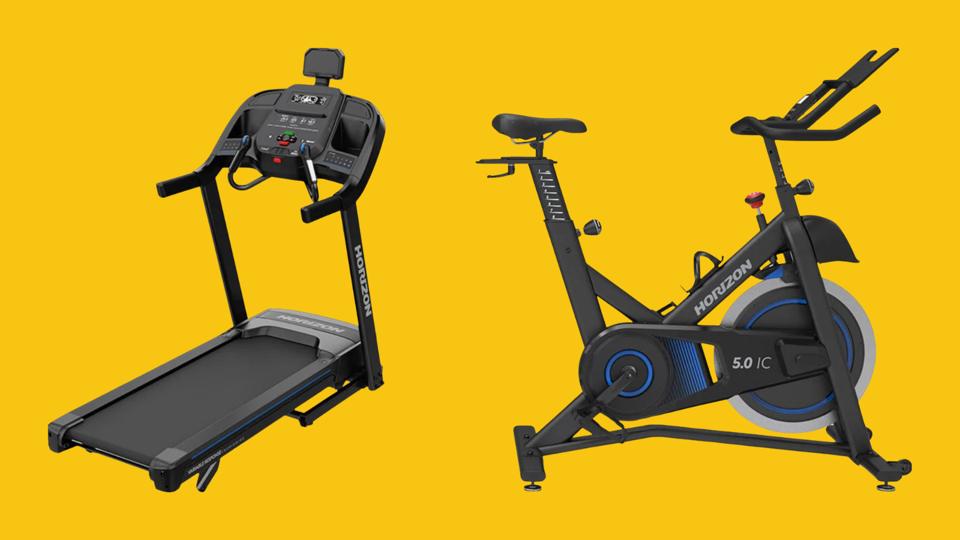
If you’re looking for a treadmill that truly masters the basics with style, the Horizon 7.0 AT tops the list and doesn’t break the bank. While it’s considerably more affordable than others on this list, it doesn’t skimp on the features. In addition to its decent speed and incline variability controlled by thumb dials, this treadmill’s Bluetooth connectivity is useful: It allows you to use a tablet or phone to follow classes on platforms like Peloton, connect to training apps like Zwift or simply play music or movies. The 7.0 AT’s basic digital display, meanwhile, keeps your progress and important stats front and center, and a fast-charging USB port supplies juice to your devices.
Who Shouldn’t Buy It
If you need a built-in screen, the Horizon Fitness 7.0 AT is likely not for you. Our tester couldn’t help but notice the treadmill’s lack of a screen, which you can find on some treadmill models in this general price range, like the ($1,799 and our pick for the best folding treadmill).
And while the size of the belt is sufficient for most athletes, some might find it a bit small, especially while running with lengthier strides at high speeds.
Why We Picked It
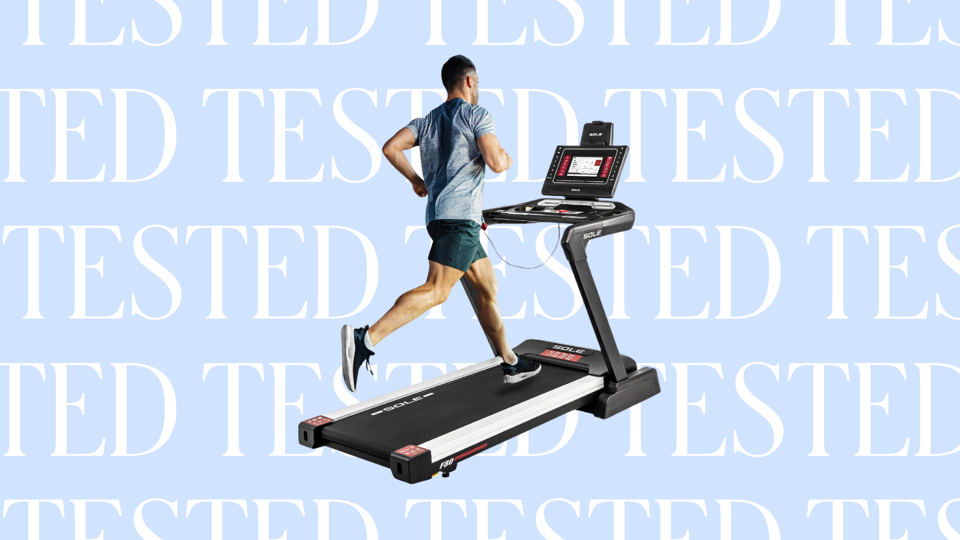
The stands out for its exceptional comfort during longer, low-impact workouts. Its 22-inch-wide belt provides more real estate than the highest-end contender on this list, the (which features a 20-inch-wide belt). Along with the belt’s double-woven construction and its thicker cushioning, our tester found that this treadmill provided an extra-gentle experience on joints and made it a game-changer for extended walking sessions.
We also appreciate the recent upgrades Sole Fitness made to the latest version of the F80, including a touchscreen with built-in entertainment apps via the Sole+ platform and a handy wireless charging pad. These features add a layer of convenience to workouts of any intensity.
Who It’s Best For
The F80 is a solid option for avid walkers, who want to get the most out of their workout. The F80’s incline levels go from 0 to 15%, making it just one of a few on this list that can go this high up. This feature allows you to incorporate serious hill work into your routine, effectively transforming a simple walk into a true hike. Despite our tester’s preference for using it to walk, it’s still plenty versatile for easy running and some interval training, with a powerful, 3.5 CHP motor and a top speed of 12 mph.
Who Shouldn’t Buy It
If you value a large display and the ability to decline, the F80 isn’t for you. (For a similar contender around the same price, the , might serve you better, as would the .) For its price compared to others on this list, we would expect Sole Fitness to include a larger display than the current 10.1-inch screen.
Related: Sole Vs. NordicTrack: We Compare Treadmills From Two Top Brands
Why We Picked It
The is one of two treadmill models in Horizon’s GO Series, both of which are “built for ease and accessibility.” Given that, it may not surprise you to learn the T101 Connect is fairly simple—it lacks a screen and the library of workout content found on many modern machines—but don’t mistake that simplicity for antiquation. It still packs a slew of useful features, including Bluetooth connectivity, easy-access speed and incline controls, built-in speakers and USB-A charging. And more importantly, it does all that in a compact package that folds away when it’s not in use. Measuring seven inches shorter than our top pick, the , it packs enough features to provide a great experience, yet it takes up less space.
Who It’s Best For
If your number-one priority is saving space, the Horizon Fitness T101 Connect is a great pick. While it’s certainly not the most feature-rich option, its no-frills design is effective and easy to store, especially for beginners, walkers and light joggers with limited floor space.
Who Shouldn’t Buy It
The T101 Connect does sacrifice a few features for its compact design; there’s no built-in screen, and because the speed caps out at 10 mph, you can’t run quite as fast on this treadmill as you can on the other models in this guide. If you’re looking for a slightly larger machine that supports more rigorous activity, take a look at the . It’s considerably more robust in design and features, and it too folds down for easy storage.
Why We Picked It
The Peloton Tread offers incredible versatility and performance that’s specially geared for running. With a maximum speed of 12.5 mph and an incline that reaches 12.5%, it’s built to handle just about any kind of run you have in mind, from speed work to recovery miles. (Its top speed is the highest of any other picks we tried for this guide, with the exception of its sister model, the .)
We love how effortlessly it transitions between speed and incline levels, thanks to well-positioned knobs on the handrails (one for speed and one for incline, which you can see in the image below), and a handy “Jump” feature that automatically ratchets up both by a point each. We also really enjoyed its comfortable and cushioned belt, which provided one of the smoothest rides among the non-slat treadmills on this list, slightly edging out the patented Runners Flex belt and the double-woven construction of the (which felt a little too squishy for me during runs).
Who It’s Best For
Dedicated runners would be hard pressed to find a reputable treadmill with so many running-specific features to elevate every single workout, and for that reason, the Tread stands atop the podium.
It also features an impressive range of interactive workouts for runners of all levels, and while a Peloton membership costs $44 a month, the access to live classes (on and off the treadmill) plus the ability to stream TV shows, movies and live sports while you exercise made it worth it in my estimation. Peloton’s running-specific classes offered a degree of friendly competition and energy that other live classes from NordicTrack’s iFIT and BowFlex’s JRNY platforms couldn’t touch.
Who Shouldn’t Buy It
For some, the price of the machine itself when combined with the monthly subscription service is likely a bit too steep. The lack of decline; relatively low weight limit compared to models like the BowFlex and NordicTrack 1750; and inability for the screen to pivot or swivel may also make it less attractive or usable for certain athletes.
Related: Peloton Vs. NordicTrack: Which Machine Is Right For You?
Why We Picked It
The was the easiest treadmill model to fold and move around among those we tested. While other models on this list fold in half, many of them are still extremely heavy to roll around and stow away; the Commercial 1250 is about 60 pounds lighter than the 1750, so you don’t have to worry about wrestling with a heavy deck after a tiring workout, or someone getting stuck underneath it. The only lighter-weight folding treadmills on this list are the , which is missing some of the display and comfort features on this model, as well as the which doesn’t have hydraulic lifting assistance but simply a dampener on the way down.
Who It’s Best For
Its foldable design makes the NordicTrack 1250 a clear choice for folks tight on space. We also recommend it to those looking for a more engaging display; the 1250’s display is still plenty immersive like the one on the 1750, allowing you to access iFIT workouts and sync your runs with real-life routes on Google Maps. (It also pivots to let you stream strength workouts off the tread.)
Who Shouldn’t Buy It
The motor on this treadmill isn’t the most powerful on this list, and it doesn’t support streaming of external content on its built-in display. If you want a model with more longevity or one that allows streaming, consider another pick.
Why We Picked It
The packs in a ton of premium features, including a whopping 67 inches of prime running real estate that’s grippy and cushy. It gave our tester a real-road feel that surpassed all other contenders in our trials, thanks to its rubber slat belt that’s known to offer increased cushioning and responsiveness. In addition to its spacious running surface, the Tread+ also has a bigger 32-inch touchscreen that’s wonderfully vibrant, and a 20-inch sound bar that’s punchy. Whether our tester took classes or ran easy while streaming movies or music, she was totally captivated.
With a maximum incline of 15%, this model adds 2.5% more grade than the standard . Intuitive dials positioned on the handrails make it easy to adjust speed and incline without breaking your stride, perfect for speed workouts with shorter intervals. Unlike any of the other treadmills in this guide, you can switch off the motor and move the belt with the force of your feet in “Free Mode.”
Who It’s Best For
If you’re seeking a premium treadmill with advanced features, top-of-the-line technology and a real-road running experience, the is the best of its kind.
Who Shouldn’t Buy It
While we originally considered recommending the Tread+ for our Best Running Treadmill category, it’s difficult for most runners to justify this model’s nearly $6,000 sticker price, making it the most expensive treadmill on this list. Beyond price, perhaps the Tread+’s most divisive quality is its appearance—it looks massive in almost any room beyond a dedicated home gym (and even then, the Tread+ commands a good bit of space), making it unsuitable for small spaces.
Other Treadmills We Tested
We researched and tested over a dozen different treadmills, but only seven made the final cut. However, a few other options came close to making the final cut.
- ProForm Carbon TLX: At $999, there’s a lot to like about this treadmill in terms of value for the money. However, it doesn’t offer as much incline and it isn’t capable of supporting as much weight as the , and the Carbon TLX uses traditional buttons instead of the 7.0 AT’s easy dial controls.
- AssaultRunner Pro: At $3,499, this pick is pretty expensive for a manual treadmill. It lacks a motor and display, so while its price tag isn’t far off other options on my list, it’s missing some of these basic features that motorized treadmills come with. For this reason, we think you’re better off getting a motorized treadmill at this price.
How We Tested The Best Treadmills
Process
- In-depth research and selection of contenders: To determine an initial pool of contenders for the best treadmills, we identified top-rated models from brands we trust.
- Hands-on testing: With this narrowed-down pool, we got to the actual testing, running and walking for hours on treadmills in showrooms, hotels, gyms, apartment buildings and homes. Forbes Vetted tester Lesley Rotchford, a former track runner who has completed multiple marathons and averages dozens of miles per week, tested over a dozen treadmills alongside the Forbes Vetted gear team.
Criteria
- Performance: We developed a rubric outlining the ideal performance requirements and features for a top treadmill. We considered motor power, running surface size and cushioning, incline and decline range, console features and connectivity, foldability and storage and overall build quality and durability. These factors helped us fairly evaluate treadmill models against one another to identify the best options for different needs.
- User experience: We ran on each treadmill, assessing motor power, incline options, running surface, smoothness of the ride and added perks like touchscreen displays and Bluetooth connectivity. We also looked at how easy these machines were to assemble, use and store while paying close attention to safety features.
- Customer ratings: We removed any models from the list of contenders that did not meet our rigorous standards. As a second layer of review, we combed through hundreds of customer reviews and omitted models with average ratings below 4 stars out of 5 across retailers.
How To Pick A Treadmill
When buying a treadmill, it’s important to consider several key factors that ensure it meets your needs and fits your lifestyle. We usually look for treadmills with easy-to-use speed and incline settings to help mimic real-world conditions. Here’s some advice on where to begin.
Size Of Running Surface
Consider the space you may need when running, both at more moderate and higher speeds. If you’re tall, you’ll want to look for equipment with a longer, wider running belt to accommodate your stride. And even if you’re on the short side, you might still like running on big, hefty machines, as they are less likely to shake or rattle at high speeds. We look for a stable, cushioned deck that won’t vibrate or shake to ensure we can push the pace without worry.
Speed
If you plan on doing interval or HIIT workouts that involve running at high speeds, you’ll need a treadmill with advanced capabilities in this area. Most people aren’t running at faster than 10 mph, so the 12 mph speed caps you’ll see on most models on this list should be just fine. The and offer the fastest belt speeds (12.5 mph) among the models we tested.
Incline And Decline
All of the options on this list allow you to walk on an incline, typically falling in the 12% to 15% range. Inclines of up to 15% are especially good for walkers who want to work up a bigger sweat as they exercise. Only a small handful of treadmills we researched and tested offered declines (namely the , and ), which is a great feature for simulating real-road conditions with uphills and downhills.
Built-In Programs And Entertainment
Today’s treadmills offer all kinds of additional features for training and entertainment, including touchscreen displays, built-in workout programs (like iFit, JRNY, Peloton and Echelon United), Bluetooth connectivity and apps that allow you to stream your favorite content. If you’d benefit from extra motivation, for example, these types of features can be enormously helpful to kick-start your workout routine.
Delivery And Setup
Because treadmills are heavy and often require assembly, some brands offer in-room delivery and setup for an additional cost. NordicTrack will also haul away an old piece of equipment, if needed. To make the delivery process as smooth as possible, we recommend that you measure your workout space to determine how much room you have for a treadmill, and look for models that fall within these measurements. Keep in mind that some treadmills, like the , are difficult to move once installed, while others are lighter and easier to shift around.
Types Of Treadmills
Not all treadmills are created equal. Before poring over specs, reviews and opinions, it’s worth considering the different types of treadmills and what they do to find the right one for your space. Here’s what you should know.
Motorized Versus Manual
Motorized treadmills use an electric motor to move the belt, which offers a consistent and predictable running experience. Manual treadmills, on the other hand, require you to move the belt with your own two feet, which can make workouts more intense but less customizable. While manual treadmills may sound like the cheaper option given that they lack a motor, they’re often more expensive.
There aren’t any manual treadmills on our list, but the has a setting that allows you to move the belt manually, as if you were on a manual treadmill.
Folding Versus Non-Folding
Folding treadmills have decks that fold vertically, significantly shrinking the machine’s footprint for easy storage in small spaces. Non-folding treadmills may be a bit more stable and durable, but folding mechanisms are actually very reliable, so you shouldn’t pass up a folding treadmill for fear that it might break. Instead, choose between non-folding and folding based on your workout space and the types of workouts you prefer. The , , , and featured in this guide are designed to fold.
Under-Desk Treadmills (Walking Pads)
Under-desk treadmills, or walking pads, are designed to be more compact and low-profile for workspaces, allowing you to sneak in steps while you’re at your desk. They’re convenient and easy to use, but the motors typically max out around 4 mph, and many designs lack handrails and other features found on full-size treadmills.
Budget Versus Mid-Range Versus Premium
Budget treadmills (around $500-800) come with basic features and smaller motors, while mid-range treadmills (around $800-2,000) deliver better build quality, larger running surfaces and more workout programs. Premium treadmills (around $2,000 and up) use commercial-grade components and come with advanced tech options, like large displays, speakers and fans.
Why Trust Forbes Vetted
The Forbes Vetted gear team regularly evaluate products that intersect technology and personal health. Our library of fitness recommendations spans everything the best walking pads to rowing machines. Regardless of the equipment, all our recommendations come backed by a member of our team.
- This story was written by Forbes Vetted gear editor Cam Vigliotta, who has a background rooted in fitness. He’s raced competitively for nearly a decade, participating in events ranging from 5Ks to ultramarathons. Vigliotta also holds a degree in kinesiology from the University of Massachusetts Amherst, where he spent extended periods working with the institution’s locomotion research group.
- Forbes Vetted tester Lesley Rotchford, who evaluated over a dozen treadmills for this guide, is a former track runner who has completed four marathons and still runs 40 to 50 miles per week, often on a treadmill.
- We know that new and updated treadmills release every year and that older models may go out of stock, so we refresh this article regularly to ensure it’s up to date. It was last updated in January 2026 by Vigliotta, who reviewed our top recommendations before adding information that breaks down the different types of treadmills.