As a tech editor and home entertainment specialist, I’ve tested dozens of TVs over the past six years—oftentimes, in my sun-soaked living room. Most of the models I’ve reviewed perform best when the lights are turned off; however, there are certain TVs that are unfazed by sunny spaces. My favorite pick overall for the best TVs for bright rooms, the , offers incredible brightness with gorgeous picture clarity so you can enjoy your content without a distracting glare.
And fortunately, you don’t need to spend a fortune on a new display for your sun-filled home. Case in point: the , one of the brightest TVs I tested that’s also equipped with the user-friendly Google OS—and it starts at $650 for a 55-inch screen. Others, like the , double as a beautifully bright OLED—ideal for gamers. Ahead, my top six nominations for the best TVs for bright rooms.
Samsung’s premier QLED display, the Samsung QN90F, uses Mini-LEDs that showcase a bright, gorgeous picture in any sunny space. Add a great blend of gaming and content viewing features, and this super bright panel is a top TV pick for many sunny spaces.
A Bright, Beautiful Picture That Stands Up To Glare
This TV has what Samsung calls a “Glare Free” display to minimize reflections, and with HDR+ and HDR10+ support, highlights pop on screen. Colors and contrast in demanding Arcane and Mad Max: Fury Road scenes look gorgeous on this TV, too; it’s not as deep as an OLED panel, but unless you’re a cinephile, this doesn’t matter that much.
Excellent Refresh Rate For Gaming
The resolution is stellar for gaming–it can display 4K content, and PC gamers can enjoy a 120Hz refresh rate that can boost up to 165Hz with Motion Xcelerator. For console gamers, it has multiple HDMI 2.1 ports to connect your Nintendo Switch, PlayStation and more. During our testing, we noted it features low input lag for speedy, responsive gameplay.
Includes New AI And Upscaling Features
The Samsung Tizen operating system is very intuitive. This year, the panels ship with Samsung’s Vision AI, the brand’s on-panel AI frameworks that deliver more features and enhance your content. You can use Live Translate to register and translate foreign languages in real time, which I found useful when watching a Portuguese soccer game. The new NQ4 AI Gen3 processor also uses 128 neural networks to deliver its 4K AI Upscaling Pro, which is a technology that reads older content and upscales while you’re watching it. All that said, if you’re looking for Dolby Vision, look elsewhere; Samsung TVs opted for HDR support over Dolby.
If you need a super bright panel but don’t want to spend thousands of dollars, take a look at the Hisense U8N. This QLED Mini-LED panel costs under $1,000, and during my testing, I found it to be one of the brightest TVs on the market. It can handle my sun-drenched living room with ease, and I found that compared to its predecessor, blooming was so much improved that it felt nearly nonexistent.
Exceptional Picture Quality With Vivid Display
Because it’s a QLED panel, you’re not going to get the deep contrast and inky blacks of an OLED display, but this was one of my favorite TVs to test this year because of the punchy vibrant colors it showcases. Additionally, it offers HDR10, HDR10+ and Dolby vision support, which is pretty unique as most TV brands offer one or the other–not both.
Smooth And Detailed Gameplay
For console gamers, you get low input lag, a 120Hz refresh rate (up to 144Hz for PCs) and multiple HDMI 2.1 ports for connectivity. During gameplay, games like the Horizon series looked great on this display, with the muted colors and high detail of Aloy’s Shadow Carja armor showcasing beautifully on-screen even during action sequences.
Minor Software Glitches
However, it’s important to note that during my testing, I noticed a software glitch: Every so often, the display “blacks out” for a second. After some research, (and experiencing the same thing on another Hisense model), I’ve found that it’s a software bug. I plan to retest this panel soon and am hopeful that Hisense addresses this issue, but for now, you may experience this if you buy the model for yourself, and there’s no assurance the issue will be fixed.
It’s also worth mentioning that every TV I tested this year–including this model–has had some kind of software glitch. At this point, it’s more of a matter of preference for which unaddressed glitch you can handle. If you can stomach this issue, it’s the best budget TV to get right now–it looks gorgeous no matter the time of day.
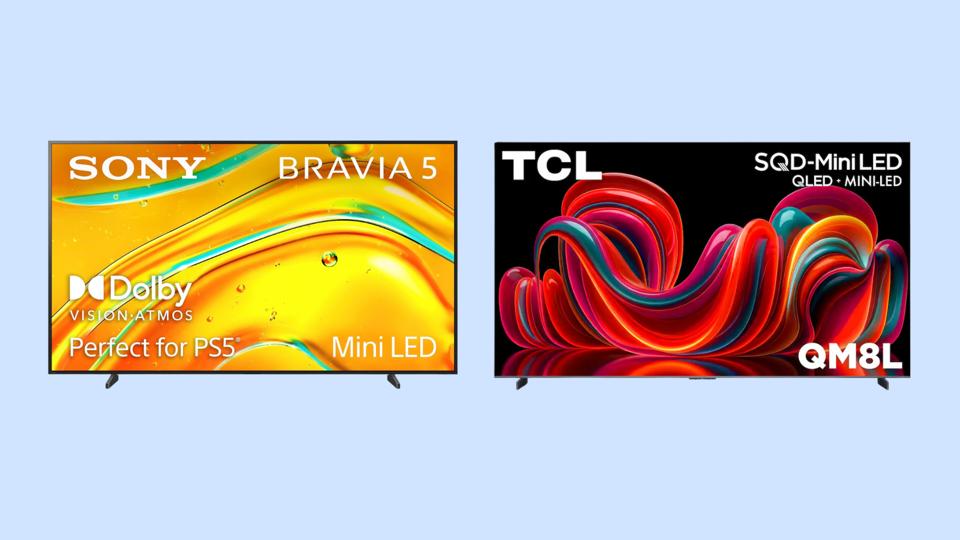
After seeing this panel in person at a Sony press event earlier this year, I found Sony’s Bravia 9 to be a game-changing TV: It combines incredible brightness and contrast in a way that doesn’t feel overpowering.
Compares To An OLED-Style Picture
Like the other QLED display picks on this list, it can’t quite match OLED’s deep blacks, but it comes darn close, in part to its impressive number of dimming zones. These create a nuanced picture with near-zero blooming, showcasing beautiful colors, deep blacks and gorgeous highlights. Sony reports that it has three times the number of dimming zones as the 2023 X95L, and after seeing both the TV and the redesigned dimming panels underneath the display in person, I can see the impact of that.
An Intuitive User Experience
The TV features the Google TV OS, which includes an intuitive user experience and the ability to use voice commands to show your favorite content. This is pretty common among smart TV operating systems, but based on my testing, Google OS is second only to Roku for ease of use and overall features.
Bonus Features: Cinephile-Ready Filmmaker Mode And AI Upscaling
It comes with HDR10 (not HDR10+) and Dolby Vision, a blend that brings a gorgeous picture to your screen, and one I’d recommend for cinephiles who want the best experience of a Filmmaker Mode. Plus, with Sony’s XR processing, older content gets upscaled via AI. It does the job really well, making this one of the very best upscaling in any TV I’ve seen; it’s simply delightful to watch old favorites like The Blob and Dracula on it.
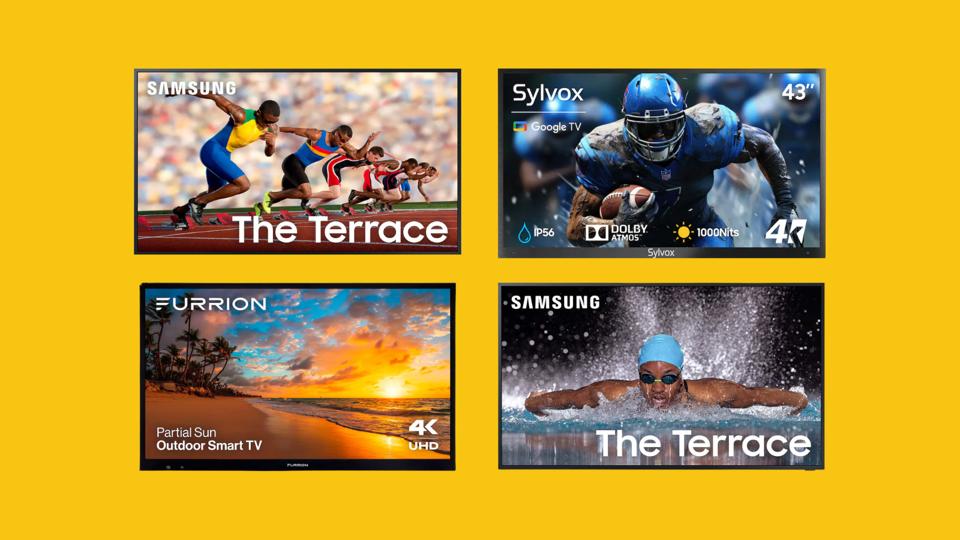
Sometimes, you want to add a TV to your porch or patio—and Samsung's The Terrace Partial Sun is an excellent option for the job. If you have a covered patio, it displays your content in partial sunlight—hence the “partial sun” in its name—and it's one of only a handful of TVs that is built for your yard and other bright spaces.
Stands Up Against The Elements
The Terrace Partial Sun bears an IP55 waterproof and dustproof rating, so it can withstand rainstorms and more without worry. (If your area is prone to hail, I recommend adding a dust cover for extra protection.) Also, it’s no secret that TV panels can get warm when in use, but this one comes with extra protection: It can handle direct sunlight for up to six hours at 104 degrees Fahrenheit. If it gets too warm, it automatically dims as a preventative measure.
Super Bright; Great For Spaces That Get Direct Sunlight
The TV is built around a 4K QLED panel and combats sunshine by sporting up to 1,500 nits brightness. After experiencing this model at Samsung 837–the brand’s flagship store in New York City–I found it to be gorgeously bright. You can opt for , but it's a little tricker to find in many sizes at this time, and it's much more expensive.
LG’s G5 TV is hands-down the brightest OLED panel I’ve tested to date: It offers an incredibly bright picture quality with the deep, inky contrast that OLED panels are renowned for. Tack on eye-catching HDR10 (note: not HDR10+) and an impressive array of gaming support features, and it’s one of my favorite OLED displays available.
Better Brightness With The Same Rich Details
While LG doesn’t provide an official nit count for its TVs, the brand says the G5 features new panel technology that boosts brightness by 45% compared to its predecessor (and my former top pick), the . This proved true during my testing, as the screen stayed vivid and easy to see in my sunny living room. Its picture quality also impressed my fellow testers, with one saying “the picture displays vibrant, rich contrast and deep red tones.” Although the colors on screen felt too intense for some testers, the high saturation makes sure graphics pop off-screen when the sun’s at its brightest.
Built For Smooth And Intuitive Gameplay
This model isn’t only the best OLED TV for a bright space, but it’s also one of the best gaming TVs, too. During testing, its 120Hz refresh rate effectively reduced motion blur and smoothed out fast-moving scenes. One of my testers noted that motion felt “smooth and action-packed,” while another said the performance was “seamless.” These qualities make sure you can enjoy every detail of a fast-paced video game without experiencing lag or screen tearing. Testers also appreciated that LG’s software keeps the Gaming Portal front and center, making it easy to find your games.
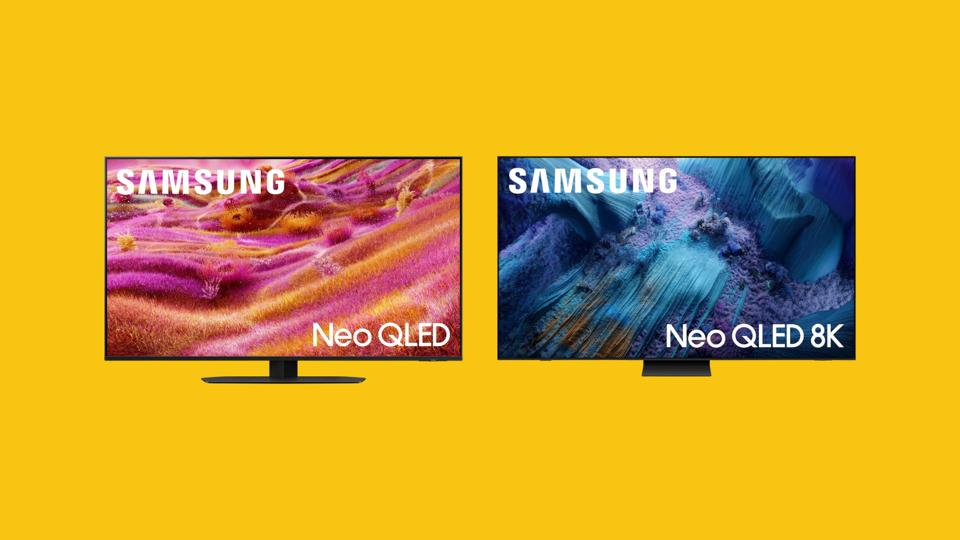
The Samsung QN990F 8K TV may cost thousands more than most TVs I’ve tested that top this list, and its sizing may be limited to 65, 75 and 85 inches, but it’s well worth the investment.
Glare-Free Picture With Rich Detail And Color
Like other Samsung panels on this list, the Samsung QN990F 8K TV offers Glare Free technology so you can enjoy your content without a distracting reflection on the screen. During testing, I found it showcased a gorgeous picture that is rich in detail and produces vivid, bright colors. While watching Arcane, I noticed that the TV handled scenes with lighting that switched between gloomy and vivid, with flashing effects, with ease, and the animation looked smooth and clear. Action sequences in Mad Max: Fury Road also looked smooth, and the orange filters were saturated without feeling overpowering. The HDR also comes with Auto HDR Remastering Pro to upscale your SDR content to HDR quality.
A Sleek, Cable-Free Setup
It gets plenty bright, but it’s not the brightness that I’m enamored with: It’s the One Connect Box, a piece of accompanying hardware. Most TVs stick all of their inputs—HDMI, USB-C and more—in the back, and you have an unsightly rat’s nest of cables visible in your space. The One Connect Box removes all the pesky cables and hardware and places the TV’s “brain” in this wireless box, so you can tuck all your connections into a TV stand or in the corner of your living room—no need to connect it via cable to your TV.
Smooth Gaming And AI Features
Gamers can expect a 120Hz refresh rate either on your console or with the Samsung Gaming Hub; both kinds of gaming looked smooth and was responsive when I tested this panel. VRR gamers can expect a 240Hz refresh rate in 4K picture, too. And because it’s a 2025 Samsung TV, you get access to the slew of Samsung Vision AI features offered, including Live Translate, AI Motion Enhancer Pro, 8K AI Upscaling Pro and more.
Other TVs We Tested For Bright Rooms
While the following models didn’t meet the requirements for this list, they still have features we appreciate. (Many are featured in our guide to the best TVs of 2026.) Because they are OLED TVs, they prioritize an inky black picture and cinematic color over brightness, making them better suited for dimly-lit living rooms.
- : The LG C5 is one of our favorite TVs we tested this year because it delivers a stunning picture with vibrant colors and sharp detail, including during fast action scenes. It’s also a dream for gamers, featuring an easy-to-use ‘Game Mode’ that keeps play smooth and lag-free. That said, the screen is too dim for rooms with bright, direct sunlight.
- : The Sony Bravia 8 II is our top choice for movie lovers seeking a premium setup. It features professional picture modes and smooth motion sequences that keep every detail looking sharp and cinematic. It also offers some of the best audio we’ve tested; the screen gently vibrates to help produce more robust sound. Like the LG C5, though, it isn’t bright enough to stand out in sun-lit spaces.
How We Chose The Best Bright Room TVs
When compiling my list of the best TVs for bright rooms, I took into account my favorite models based on firsthand testing experience and expertise in the TV space. Below, see the steps I took to identify our team’s favorite models.
Process
- Researched reputable brands: I narrowed my picks down to top brands, including Sony, Samsung, LG and more. Then, I considered what models stood out from the pack. I also combed through hundreds of customer reviews to learn more about other users’ experiences.
- Conducted firsthand testing: I’ve personally tested almost every TV on this list, including the and the . I took into account my three weeks of testing with each TV in my afternoon sun-drenched living room. Every TV in this guide (with the exception of the ) was also tested with a dozen panelists in our New York facility.
- Interviewed an industry expert: Aside from relying on my own testing experience and extensive knowledge, I tapped , president of Techspontential, for his expertise.
Criteria
- Performance: I extensively researched each model on this list. Features I reviewed include refresh rate, operating system and brightness levels. I also tested and reviewed the software on most of these TVs, paying close attention to their picture and audio enhancements, including new AI features. I tested how well I could fine-tune each TVs’ calibration for sunny/bright viewing, as well.
- Screen type: I considered each display type, taking into account historical brightness levels of each alongside my own personal testing experience. I also considered the technology behind each display’s screen to see if there were any standout features to enhance brightness while keeping a high picture quality.
- Overall value: To make the cut, each pick had to present an excellent value, balancing features and cost. We also made sure to include a variety of price points and specifications to offer a solid bright room TV model suitable for every type of TV watcher.
How To Shop For The Best TVs For Bright Rooms
A living room that gets a lot of sun or has a natural ambient light can make it feel almost impossible to find a TV. Here’s what you should consider when shopping for your next TV for bright rooms.
Anti-Reflective Technology
A good TV for a bright room should have some kind of anti-glare or anti-reflective technology. It may come at the cost of some minor contrast degradation, but it’s something that’s a must for bright spaces.
Panel Type: OLED Versus QLED
There are two main types of TV panels on this list: QLED (a bright Mini-LED panel with a quantum dot layer and dimming zones) and OLED (which uses self-lit pixels). While QLED TVs are naturally brighter—and a better choice for many sun-drenched room—new technology in OLED TVs, like the , are closing the gap. That said, OLED’s biggest advantage remains its contrast, offering “true black” and “no backlighting bleeding over,” says Avi Greengart, president of Techspontential.
Resolution
To handle a bright room, your TV needs to be crisp and clear with at least a 4K resolution. These screens are able to produce a sharp and detailed image at an accessible price. For a more premium viewing experience, an 8K TV is an upgraded option that produces richer, more lifelike images.
Refresh Rate
Refresh rate is critical for smooth content, whether you’re gaming on a PlayStation 5 or watching an action movie. It dictates how often the picture updates on your screen—the higher that number, the smoother (and less choppy) the motion. While budget-friendly TVs can use a 60Hz refresh rate, ideally, you should look for a 120Hz refresh rate or higher.
Brightness
TV brightness is measured in nits, with high numbers like the 3,000 nits indicating a very bright panel. However, TV companies are listing this spec less often. If you can’t find nits mentioned, look for features like “brightness boosters” or “brightness boost” to help you get a picture built for natural ambient light.
Why Trust Forbes Vetted
We’ve spent years testing products to build a comprehensive library of consumer tech and electronics guides, which included dozens of TV recommendations for every type of space. Most recently, we panel tested 16 TVs in our New York facility to determine the best (and the brightest) models of the year. You can see our overall top picks in our guide to the best TVs of 2026.
- Forbes Vetted tech and electronic editor Rebecca Isaacs is a home entertainment specialist with a background rooted in TV hardware. For six years, she’s regularly attended trade shows and conferences to report on the latest products to hit the market. She’s tested dozens of TVs on her own, and led a round of panel testing in October 2025, where folks gathered to put a series of TVs through their paces.
- In addition to this guide, we’ve written about different TV sizes and screen technologies, covering categories like the best 85-Inch TVs and the best gaming TVs.
- To keep our buying advice up to date, we routinely review this guide. It was last refreshed in February 2026 by tech updates writer Alexandra Garrett, who added the to this guide.