When I was expecting for the first time, I spent more time researching crib mattresses than any other baby item. That’s because little ones spend so much time sleeping, and the right crib mattress can also make the transition with your child to a toddler bed easier. Since the birth of my oldest son, I’ve become the editor overseeing baby gear testing at Forbes Vetted, where I get to use that (slightly obsessive) research to guide readers to the very best crib mattresses. Our panel of parents and little ones have tested 22 top-rated options over the course of several years, and we continue to evaluate winners over the long-term. The has stayed at the top of this list, thanks to its quality and ease of use, but we have several other are several other great picks as well.
An Excellent Long-Term Investment
Our testers give high marks for its durability and waterproof layer, and found that little ones sleep well on it, too. We recommend the steel innerspring version over the (although that one is good, too) because the metal coils tend to offer more longevity. That means you can use it for your next child or as your baby’s toddler bed through the preschool years. However, springs typically make crib mattresses heavier—but at 19 pounds it’s far from the heaviest standard crib mattress we tested. I found that it’s quite stiff in a good way, which makes changing sheets and moving the mattress easier.
Like many of our best crib mattress picks, this Naturepedic one has a firm side for infants and softer side for toddlers. “The mattress seemed very tough to me as a new mom, but my child has always been happy with it,” says a tester who used both sides over the course of two years. She adds that the mattress still seems new.
Excellent Material Safety
This pick impressed me with its long list of certifications, including , and —all of which evaluate the chemical safety of the mattress as a whole and not just certain materials or components. Instead of vinyl, which is associated with releasing harmful VOCs, the mattress comes with its own removable waterproof sheet that uses food-grade polyethylene made from sugarcane. There’s also a separate washable cover that goes over the waterproof sheet. During testing, we found that the waterproof layer does a good job of keeping the inner parts of the mattress dry and can be wiped off easily, but it’s also easy to remove and machine wash.
A Word Of Caution About Breathability
It’s good to be a bit skeptical about breathability claims from any mattress brand. A number of the companies, including Naturepedic, say their crib mattress materials are more “breathable” than the competition. But according to the pediatricians I interviewed, there’s no data to support the idea that a so-called breathable mattress reduces SIDS. “There’s no mattress that’s breathable if you’re face down on it,” says Dr. Mary Thomas, a pediatrician at NuHeights Pediatrics in New Jersey.
That said, there are some other benefits to this design. A mattress or mattress cover that promotes more airflow may help little ones feel more comfortable when it’s hot.
We Also Recommend The Mini Crib Size
If you’re looking for a mattress to fit a mini crib, I recommend , which has the same certifications as its full-size mattress but does not use coils and instead relies on the brand’s “Wavesupport” material made from food-grade polyethylene. One tester, whose son slept on this mattress from birth to 8 months, gave it 4 out of 5 stars. “I am super happy with this mattress’ organic composition, weight, waterproofness, washability and the inclusion of the spongey mattress cover,” she says. “The cover washed perfectly, and the mattress itself also seems to be made of durable, water-resistant material.”
A Forbes Vetted Favorite
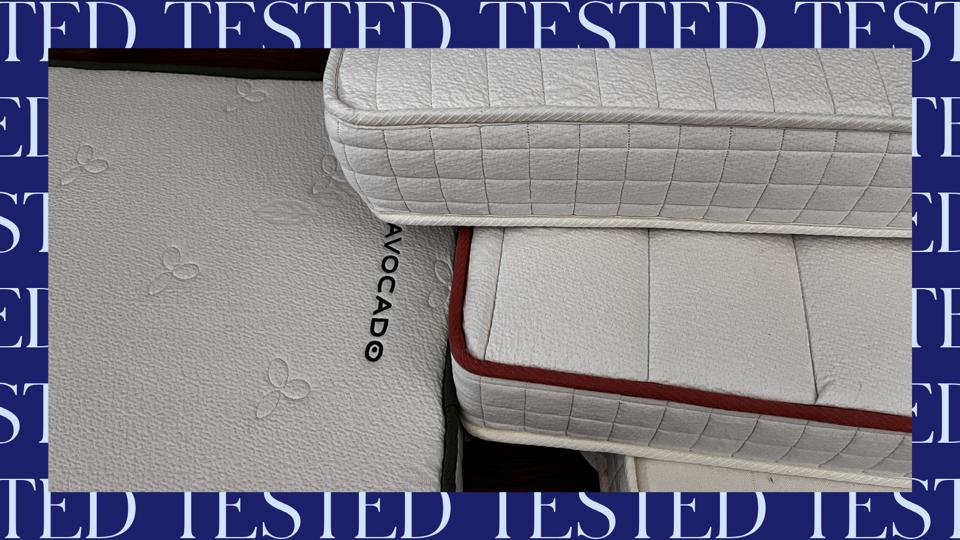
The mattress company Avocado is our expert sleep team’s top organic mattress pick for its commitment to quality and sustainability—something I’ve also experienced firsthand with my review of its Eco Organic Mattress. The brand’s three crib-sized options are excellent. All of them have earned a slew of sustainability certifications and are made the U.S., but each has a somewhat different composition of natural materials and different price.
After testing all three, my top organic recommendation is Avocado’s mid-priced Organic Crib Mattress, which really hits the sweet spot for value and comfort. However, all the brand’s mattresses are extremely high quality, and Avocado also makes our top pick for children, so I would recommend any of its crib options.
A Flippable, Organic Latex Crib Mattress
Like our top crib mattress pick, the Avocado Organic Crib Mattress is a flippable bed with a very firm side for infants and a softer side for toddlers. I particularly like that the two sides are clearly labeled with large embroidery, making it easier to read for sleep-deprived parents than mattresses that use a tag to indicate which side is which.
This mattress is made with nearly 100% organic-certified materials, with no metal innersprings. The mattress contains a core of coconut husk fiber mixed with latex. On the infant side, this core is covered with a layer of wool and held in with a thick cotton cover. On the toddler side, there’s an added layer of soft latex that increases the padding between the core and wool. My toddler likes the sleep surface a lot, as did the toddler of another tester. “The Avocado mattress feels nice,” she says. The cotton exterior is meticulously stitched, and has held up extremely well overall during long-term testing.
Heavy, With No Included Waterproof Layer
This mattress is fairly heavy at 28 pounds and with a 5.5-inch height, so most crib sheets are a snug fit. Another tester and I both felt that its pros outweighed this con, but if lifting something heavy is a dealbreaker, you’ll want to consider our lightweight crib mattress pick below, the .
Another downside of all of Avocado’s crib mattresses is that they don’t come with a waterproof cover—in fact, there’s no waterproofing component at all on these mattresses. Because blowouts, leaks and spills are unavoidable on a baby’s bed, I recommend you purchase a waterproof mattress protector—and honestly, having two or more is your best bet, so you can swap a clean one on while the other one is in the wash. , and I also recommend Naturepedic’s .
The Less-Expensive, Single-Sided Version Is Also Excellent
If you want the absolute best price on an organic mattresses for your newborn, the brand’s lower-priced is single-sided and costs less than $250. It has individually encased innersprings (recycled steel coils) rather than latex, and weighs the least of Avocado’s crib mattresses at 21 pounds.
I found this mattress to be excellent quality, but it does have fewer certifications than the mid-tier option. It may also be slightly less comfortable for bigger toddlers because it lacks additional layers, and it’s a bit shorter at 4.75 inches.
Related: Read the full Avocado crib mattress review for my in-depth test findings.
Before testing Avocado’s Luxury Organic Crib Mattress, I was prepared to dismiss it based on the price alone (when I began testing, it was listed well over $1,000, though the cost has actually come down considerably). But after sleeping on it, my then-3-year-old informed me—unprompted—that it was his favorite of all the mattresses that I’ve swapped into his bed. I also can’t deny that he slept on it particularly well.
The Addition Of An Innerspring Unit
Like my Best Organic pick, the Avocado Luxury Organic Crib Mattress is highly decorated with certifications and has a flippable design. But what sets it apart is a core made with individually wrapped metal coils as well as a thicker, softer latex-only layer on the toddler side. It has a firm coconut fiber-and-latex comfort layer on the infant side, similar to other Avocado crib mattresses. It’s also half an inch taller than the non-luxury version of this mattress featured above.
Comfortable With Unexpected Edge Support
As my son can attest, the toddler side is plusher and cushier than the other Avocado crib mattresses, without being overly soft or squishy. It’s very clearly labeled which side is which. The overall quality thus far has been excellent during nearly a year of use.
In addition, there’s also a special edge support perimeter made out of that same coconut fiber material—and I can really feel it when I push down on the softer side of the mattress. Edge support isn’t a feature I’ve found on any other crib mattresses, and I like that my little guy seems less likely to slip off as he sits on the side of the bed.
One Of The Tallest And Heaviest On The Market
With a 6-inch height, it’s at the upper limit of how tall a crib mattress can be (the Naturepedic our top pick, is also 6 inches tall, but has smaller width and length measurements by about half an inch). This means crib sheets and the mattress protector might be a tight fit and take a little more time to put on (unless you purchase Avocado’s and , which are designed to fit both its non-luxury and non-luxury models).
Finally, all those premium materials and extra height make this a very heavy crib mattress at 36 pounds. I was able to move the mattress in the box by myself, but I can see it being a struggle for some caregivers to change the sheets and get it in and out of the crib. Like all the Avocado mattresses, you need to buy waterproof sheet separately.
A Rare Combination: Lightweight, Nontoxic And Affordable
A heavy crib mattress is a dealbreaker for some caregivers, like moms recovering from a C-section or folks with limited mobility. But many of the lightest options on the market contain undesirable synthetic materials like vinyl. That’s why the 8-pound Gentle Start Crib Mattress by Lullaby Earth, a brand owned by Naturepedic, stands out.
This mattress is unique among other ultra-lightweight crib mattresses because it’s EWG Verified. According to the brand, the fill is a recycled polyester material and the cover has a nontoxic polyurethane (TPU) waterproof backing. A brand representative also says that although the mattress does not contain any substances prohibited by GOTS, the company did not seek organic certification for this product in order to keep the costs down.
Easy Sheet-Changing And A Comfortable Sleep Surface
Both of our parent testers say it’s easy to change the sheets on this mattress given its comparatively lighter weight. One notes that it’s firm and light enough for him to put on fresh sheets without taking the mattress out of the crib.
It’s also another flippable option, and our testers report that their tots slept well on its softer side. “It seems comfortable to the touch,” says one dad, who adds that his 3-year-old had “zero complaints.”
Durable And Comes With A Waterproof Cover
After nearly a year of use in a crib, the Lullaby Earth held up well. “I’m very impressed by the quality,” our tester says. “It’s made it through a few messes and also a growing toddler who we’re trying to keep in a crib as long as possible.” It comes with a zipper-free waterproof cover, which can be machine washed and dried and has proven shrunk-proof after many rounds through the laundry.
If you’re looking for an affordable crib mattress that’s still free from the most concerning materials (like VOCs and fiberglass, which you can learn about in our guide to fiberglass-free mattresses), consider the Simmons Kids SlumberTime Naturally mattress. It’s waterproof without using vinyl, and it has an infant side and a toddler side for added comfort as your little one grows. That’s doing a lot for a mattress that’s currently on sale for less than $100.
Soy Foam With A Solid Safety Certification
It’s worth noting that the “soy-based” foam is still a very processed material, and the company declined to disclose how much soy is used to make the material for proprietary reasons. Nonetheless, parents can feel pretty good about this mattress thanks to a Greenguard Gold and CertiPUR-US ratings. I also like that it’s manufactured in the U.S., and fairly lightweight (but not our lightest pick) at just over 12 pounds.
May Not Be A Hand-Me-Down
One of our testers purchased this mattress for the first of her three kids prior to participating in our testing process. She noted that this mattress did start to show signs of wear after several years of use with two children: A dent began to form on the infant side, which is a sign that it’s time for a new mattress. “I would caution against using this crib mattress for multiple children or passing it along as a hand-me-down unless you confirm that your mattress has held its shape,” she says.
GOTS And GOLS, But Lighter
Because organic versions of common bed materials tend to be denser than their synthetic counterparts, it’s hard to find an organic crib mattress that’s lighter than 25 pounds. But the Katu Organic 2-Stage Crib Mattress is an exception; it’s made from certified organic materials yet weighs just 15 pounds.
I found that this made moving and changing sheets on the bed much less of a chore. While the mattress is pretty stiff—meaning I need to more or less take the mattress all the way out of my son’s crib—this part isn’t hard to do, especially because the mattress is much lighter than other organic mattresses.
Two-Stage Support
Like many of our other top picks, it has two-stage construction with an infant side and a softer toddler side. The firm infant side is made with high-density coconut fiber and the softer toddler surface uses natural latex. While the toddler side is slightly less plush than the organic Avocado beds I tested, my 4-year-old slept soundly on this option and liked that it makes his bed less tall. After sleeping on this mattress for about six months, it’s shown no signs of wear. The two sides are clearly labeled with a tag.
A Great Value For Certified Organic Materials
Although this bed is light, Katu’s materials don’t skimp on sustainability and safety, with its GOTS-certified cotton and wool and GOLS-certified latex. This makes it a good pick if you want natural materials at a lower price than the mid-tier Avocado or the Naturepedic. It’s worth noting, though, that while most high-end organic mattresses are manufactured in the U.S., this one is handcrafted in Sri Lanka, which helps make the price more accessible.
One note, however: This mattress is not waterproof, so you’ll want to pair it with (or an option from another brand) to manage blowouts or spills.
Other Crib Mattresses We Tested
In addition to the winners listed above, here’s the full list of the other crib mattresses our panel tested, plus their overall star rating (out of 5).
- (4/5 stars): As I noted earlier, the one-sided version is a nice mattress, and it’s the lowest price for a crib mattress from Avocado. But after using several of the brand’s mattresses with an older tot, I think the mid-price Avocado Organic Crib Mattress better serves most families for the longest duration.
- (4/5 stars): Our tester really didn’t have anything bad to say about this crib mattress, which has Greenguard Gold Certification and sells for about $200. It’s flippable and good quality. But with slightly lighter options and other models with more certifications for the same price, it got edged out by the competition.
- (3.5/5 stars): One of our testers loved this lightweight model, while another was concerned about looser fabric (which can be a suffocation hazard) on the mattress she received. It weighs just 8 pounds—the same as our best lightweight pick—so if you want a light model for a lower cost than the Lullaby Earth mattress, this might be worth considering. It has a Greenguard Gold certification, but isn’t EWG verified.
- (3.5/5 stars): This is another pretty solid mattress that’s Greenguard Gold certificated but uses a synthetic material for its interior support. It’s vinyl-free, but in the end, it just didn’t win out against other mattresses with our testers.
- (3.3/5 stars): We sent this mattress two testers, and both reported that it’s difficult to tell which side is intended to be used by infants and which is for toddlers. For me, that’s dealbreaker, because infants need a firmer sleep surface for safety reasons. It’s also worth noting that this mattress has an antimicrobial treatment, something that EWG says is best to avoid. One tester did report that the washable cover held up well through multiple laundry cycles and overall seems to be high quality. But we think the cons outweigh the pros on this one.
- (3/5 stars): This mattress is made primarily of organic latex. Unfortunately, it’s so flexible and bendy that I found it difficult to change sheets. Also, it rebounded more slowly than most when I pushed my hand into it, and my son slept less well on it.
- (3/5 stars): Only one side of this pick has a waterproof coating, while the other side has a “breathable” side without waterproofing—so you’ll need to add your own protector when your baby is young. Although this mattress may work for some families, we feel other options on this list are a better value.
- (3/5 stars): This mattress was a pretty good contender for the Best Value pick. It didn’t ultimately win because our tester found that, although the outer cover can be removed and machine washed, the inner mattress retains some moisture.
- (3/5 stars): This is another mattress that claims babies can breath “through” it, but according to the experts I interviewed, there’s not a lot of good data to back that type of claim. One of our testers also reported that the cover was difficult to machine-dry, despite claims on the label.
- (2.5/5 stars): This mattress was part of our original round of testing, but it wasn’t a winner because it contains vinyl. We’ve decided to no longer continue to test crib mattresses containing this material.
- (2.5/5 stars): This is another mattress that was part of our original round of testing, but it wasn’t a winner because it contains vinyl.
- (2.5/5 stars): This mattress wasn’t a winner because it contains vinyl.
Discontinued
- Soaring Heart Organic Crib Mattress (4/5 stars): This crib mattress appears to be discontinued. It was a U.S.-made organic mattress that uses mostly wool and latex. But after trying out many other organic mattresses, I concluded Avocado gives parents better value.
How We Tested The Best Crib Mattresses
Our Testing Panel
Forbes Vetted began mattress testing with one primary tester in early 2023, and we have since expanded our testing panel to include 10 testers with kids ranging from newborn to 4 years old. We continue to use the mattresses in our own homes on a long-term basis and regularly fill out questionnaires.
Testing Methodology
In total, we’ve tested 22 crib mattress models, including both full-size and mini crib options. Here’s how we evaluated each one:
- Ease of use: Parents evaluated how easy it is to move the mattress, change the sheets and flip it over.
- Firmness: We evaluated how firm the surface felt when pushing down on the mattress and noted if any of the infant-rated sleep surfaces didn’t rebound instantly. Those parents evaluating mattresses that offer two levels of firmness were asked to compare the sides. (Keep in mind that the U.S. government already sets crib mattress firmness standards.)
- Child comfort: Parents reported how well their child slept on each mattress, and some older toddler panelists chimed in with their thoughts, too.
- Features: We evaluated any special features, such as removable, waterproof and/or machine washable covers and dual-sided designs that are intended to meet the needs of growing children as they move from baby to toddler.
- Quality: Testers evaluated the overall quality, and we continue to collect long-term data to determine that our top picks hold up well over the course of time that a child needs to use a crib mattress.
Finally, we continue to test new models as they come onto the market.
Federal Standards And Our Selection Process
All new crib mattresses sold in the United States must meet as set by the Consumer Product Safety Commission (CPSC). These rules mandate that products are free from lead, have proper labeling, meet firmness requirements to reduce the risk of SIDS, are no more than 6 inches thick, and are free from hazards like sharp edges and loose parts.
We did not conduct additional testing to determine if mattress meet these legal requirements. Instead, we primarily focused on the features listed above, which also greatly matter to caregivers. To earn a spot on our best crib mattress list, products must go beyond this safety baseline and minimize potentially harmful chemicals.
What To Look For In The Best Crib Mattresses
When deciding what crib mattress is right for your situation, caregivers selecting a crib mattress should consider the following attributes.
Crib Size
The CPSC guidelines created a standardized size for full-size crib mattresses and full-size cribs, which means that a standard crib mattress should fit in a standard crib and a standard toddler bed. However, there are a range of non-standard cribs on the market, often called “midi” or smaller “mini” cribs.
If you’re considering one of these for your nursery, it’s also important to select a crib mattress that’s compatible with it—you may be limited to what’s made by the manufacturer. Not all mini cribs have a standard size or even shape, however most brands have guidance to which mattresses fit their smaller cribs. We plan to test mini crib mattresses more extensively in the future, but so far our testers have praised both the and the —based on early data.
Firmness
Every expert I spoke with reiterated the importance of a firm crib mattress, which reduces the risk of SIDS. “It shouldn’t be smush-y; it shouldn’t sag in any way,” says Dr. Thomas.
At a time when most parents are shopping for nursery products online—or selecting them online for our registries—it can be hard to tell, but you can confirm your mattress is firm enough by examining it when you open the box. “If you push on it, it shouldn’t give very much and should go back to its original shape really quickly,” says pediatrician Dr. Jennifer H. Stiff. If the material is slow to recover its original shape, it’s not safe for an infant.
That said, many crib mattresses (and all of our top picks) have a firmer side for infants and a softer side for toddlers. Some of our toddler testers really did notice the difference, too. But if you do purchase a dual-sided crib mattress, use extra care to make sure babies under the age of 1 year always sleep on the firm side. “It’s really, really important that the correct side is used for an infant,” says Lisa Trofe, executive director of the Baby Safety Alliance. “That sleep surface needs to be firm, so there’s no possibility of an infant’s face conforming to the material.”
Mattress Weight
A crib mattress’ weight can make a big difference to a caregivers’ experience changing the sheets. Organic and more durable materials do tend to be heavier. The mattresses we tested ranged from 8 pounds up to 36 pounds. Parents who have physical limitations or other concerns about lifting a heavy mattress out of the crib to change the sheets may want to consider lighter options.
Material And Chemical Safety
The most common materials used in crib mattresses are metal springs, cotton or wool batting, polyester fill, latex or memory/synthetic foam. But there are all kinds of coatings, fire retardants and chemicals that are also used in mattresses. For instance, a reports that the foam padding in some crib mattresses emits high levels of volatile organic compounds, or VOCs.
Because babies and toddlers spend so much time in close contact in their cribs, the best crib mattresses should be free of harmful chemicals. Stiff recommends avoiding mattresses with phthalates due to an , and volatile organic compounds (VOCs) due to an association with . In addition to those materials, the recommends avoiding fiberglass and other harmful fire retardants, PVCs (vinyl or polyvinyl chloride) and PFAS.
Certifications
Third-party certifications can be a relatively easy shorthand for a higher safety standard, particularly when it comes to concerning chemicals. Here certifications I look for:
- : The Baby Safety Alliance Verification Program (formerly called the Juvenile Products Manufacturers Association or JPMA) is a voluntary certification that specifically applies to products for babies and children. The certification combines the strictest federal, state, ASTM and some retailer standards and ensures products meet or exceed these requirements.
- : With a list of over 6,500 banned substances, products with a Made Safe seal are free from a wide range of harmful and potentially harmful chemicals, including PFAS.
- : Administered by UL (a company that provides a range of independent auditing services), Greenguard Gold certification means a product meets a strict standard for VOCs—or in other words, the mattress doesn’t off-gas harmful chemicals that reduce air quality.
- :The GOTS certification is the gold-standard for organic fabric. Most commonly applied to the cotton or wool in mattresses, this certification not only ensures organic farming practices but also prohibits a wide range harmful substances from being used in the fiber production process.
- The GOLS standard ensures that natural latex, which comes from trees, is not only produced responsibly but is also processed with a minimum of harmful substances.
- : This certification ensures that mattresses are free from fiberglass, other kinds of chemical fire retardants, PVCs and PFAS. It also ensures a high level of materials transparency and safety.
You may also see mattresses that have a certification. It’s worth noting that this certification only applies to the foam inside a mattress (not the cover or other layers) and is generally seen as less stringent than other chemical standards—it doesn’t go much further than chemicals that are prohibited by U.S. law.
How To Use A Crib Mattress Safely
Here are some important safety tips to keep in mind when using a crib mattress, according to the experts we interviewed and the .
- Use a snug-fitting sheet with your crib mattress. Keep out any loose bedding, pillows, toys and crib bumpers to reduce the risk of SIDS.
- Standard crib mattresses should fit a standard crib according to federal guidelines. However, when using the crib and mattress together for the first time, check that there’s no more than a half-inch gap between the mattress and the crib slats or sides. Larger gaps increase the risk of injury. There should be “no more than a half-inch gap on each side of the mattress between the mattress and the crib slats,” says Dr. Stiff.
- Ensure that the crib mattress is flat and level. Do not raise one side of the mattress or crib by placing anything below it, or by otherwise tilting the sleep surface.
- If your crib mattress has a toddler side and an infant side, be sure to use the infant side until your baby is at least 1 year old.
- Stop using the mattress if it starts to show signs of wear, develops an indentation or get any tears.
- Buy a new mattress when possible to ensure that the latest safety standards are met. It’s fine to pass a crib mattress down from one sibling to the next, as long as it’s in good condition. “If it’s been in a damp location where there could be mold, you wouldn’t want to use that hand-me-down crib mattress,” says Stiff.
Why Trust Forbes Vetted
Like all of Forbes Vetted’s guides to baby gear and nursery furniture, we deeply researched the components that go into crib mattresses and thoroughly tested top-rated options with our own kids.
- The author of this article, Margaret Badore, is a journalist who’s covered health and science for 18 years. As the senior baby and kids gear editor at Forbes Vetted, she oversees the testing of a range of parenting products—from pregnancy pillows to travel cribs. She personally tested eight crib mattresses with her kids over the course of researching this story.
- This story was edited by Rose Gordon Sala, Forbes Vetted’s deputy editor and a seasoned journalist who has covered parenting for over 10 years. A mom of three, Sala has tested mattresses extensively, including the best kids mattresses.
- The parenting team closely follows the baby gear industry, including recalls, product launches and trends. We regularly attend industry trade shows and press briefings, like ABC Kids Expo and the North American International Toy Fair.
- We continue to test new products as they come out to regularly update this article to ensure accuracy and that our recommendations are available. It was most recently updated by the author in June of 2026 with more long-term testing insights.
Our Experts
- , M.D. is the managing physician partner at NuHeights Pediatrics in New Jersey.
- , M.D. is a pediatrician at Norton Children’s in Louisville, Kentucky.
- is the pediatrician-in-chief at Children’s Memorial Hermann Hospital and chair of pediatrics at UTHealth Houston.
- Lisa Trofe is the executive director at the (formerly JPMA).