I was a kid when my parents broke the news that I’d inherited my grandfather’s flat, wide feet, and decades later, I still have trouble fitting in shoes. A large portion of the U.S. population—upwards of 50%, according to some data—falls into the same category, with feet that are broader than average. Given that so many of us need wide footwear these days, I spoke with a physical therapist to find the best shoes for wide feet, before naming the the best option overall.
“Measure your foot yearly, and select the shoe that fits your foot,” suggests Dr. Milica McDowell, a physical therapist and the assistant vice president of education at U.S. Physical Therapy. “Brands and models vary, so if you are someone who thinks you’ve been wearing the same sized shoe since high school, it’s time to reconsider.” By evaluating styles for fit, comfort and price, I compiled a list of shoes that meet different needs, whether you’re an avid walker, runner, golfer or commuter. Ahead, find all the best shoes for wide feet that passed my review.
Our Top Recommendations

Best Shoes For Wide Feet Overall

Soft, Versatile Foam From Heel To Toe

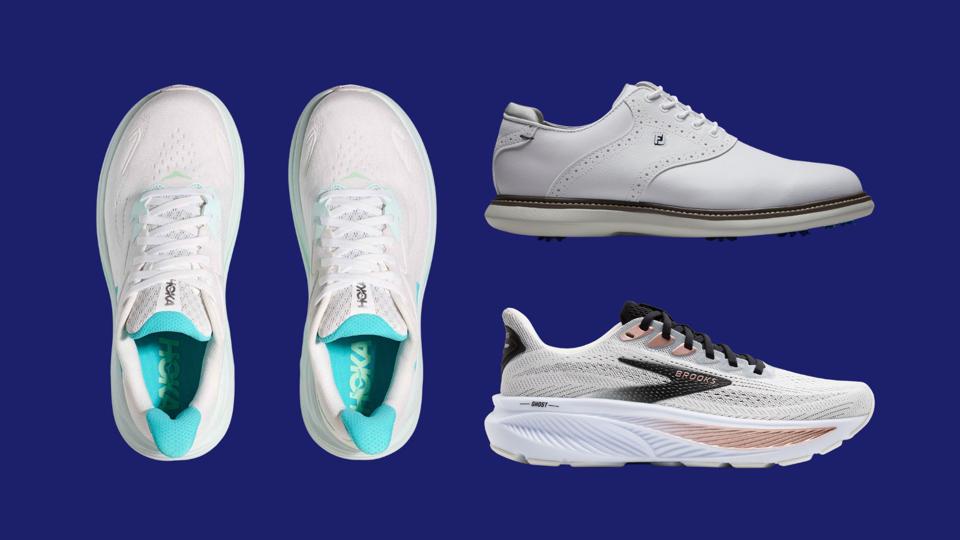
Hoka Clifton 10

Sizes: 4 to 12 (women’s); 7 to 16 (men’s) | Widths: Medium, wide, extra-wide | Weight (per pair): 17.6 ounces (women’s); 19.6 ounces (men’s) | Heel drop: 8mm | Upper material: Mesh

The Clifton 10 sits atop so many of our guides because it meets so many needs, and that includes the needs of anyone who has wide feet. The shoe’s mild rocker delivers a comfortable and smooth follow-through during your stride, while plush cushioning helps take the edge off impacts and durable rubber underfoot outlasts months of use. Available in wide and extra-wide widths, it’s still lightweight in spite of all the foam it employs, and other key details like a mesh upper and cushioned heel make the experience even more comfortable.

Unfortunately, color choices are pretty slim if you’re looking at the extra-wide options, which is a bummer considering Hoka’s reputation for standout colors. Still, it’s a truly versatile, easy-to-wear shoe that I’ve loved for years, and whether you’re walking, running or traveling, it will rise to any occasion. Read my full review of the Clifton 10 to learn more about why I love it, and where it stands to improve.

Want to save this story for later?
No need to bookmark—get it straight to your inbox.
We've sent this story to your inbox.

Best Running Shoes For Wide Feet

Dynamic Cushioning For Optimal Support And Energy Return

Adidas Adizero EVO SL

Sizes: 5 to 12 (women’s); 6.5 to 16 (men’s) | Widths: Medium | Weight (per pair): 13.2 ounces (women’s); 15.8 ounces (men’s) | Heel drop: 6mm | Upper material: Mesh

The Adidas EVO SL doesn’t actually come in widths beyond the standard “medium,” but a lot of wide-footed runners continue to sing this shoe’s praises just the same. That’s because it’s roomy through the midfoot, so it should feel good when you slip it on and feel better as you break it in over time. The toe box is also a bit wider to provide your piggies with room to spread out as you step, and the mesh upper circulates air to keep them cool.

I think this is a great shoe for daily training, but you’ll want something more propulsive and reactive for speed workouts based on the feedback I’ve received. And if you’re accustomed to wearing extra-wide shoes, you’ll need to find a model that actually comes in wider widths. Otherwise, this is a fantastic option for runners with wide feet who gravitate towards dynamic workouts.


Best Walking Shoes For Wide Feet

Adequate Foam And Breathability For Long Walks

Brooks Ghost 17

Sizes: 5 to 13 (women’s); 7 to 15 (men’s) | Widths: Medium, wide, extra-wide | Weight (per pair): 18 ounces (women’s); 20.2 ounces (men’s) | Heel drop: 10mm | Upper material: Mesh

It’s incredibly difficult to recommend just one walking or running shoe when great options abound, but after spending months with the Brooks Ghost 17, I think it strikes the perfect balance between fit, support, breathability and overall comfort. The shoe’s nitrogen-infused foam feels slightly firm, which is great for long-term support, and the mesh upper is breathable to prevent overheating—a bonus if you prefer long walks. I also like that the ride feels predictable whether you’re walking or jogging, though the Ghost’s true selling point (at least, as it relates to this guide) is its wide and extra-wide widths.

The toe box is slightly narrow, but I haven’t experienced any rubbing or discomfort, and our female tester has had a similarly positive experience, praising the design’s cushioning and support. No, the Ghost 17 isn’t going to help you win any speed walking trophies, but it will help you enjoy every step in total comfort. My full review breaks down this shoe’s benefits and drawbacks.


Best Golf Shoes For Wide Feet

A Squared Midsole For Added Comfort

FootJoy Traditions

Sizes: 5 to 11 (women’s); 7 to 15 (men’s) | Widths: Medium, wide, extra-wide (men’s) | Weight (per pair): N/A | Heel drop: N/A | Upper material: Synthetic

The FootJoy Traditions golf shoe may sport a stiffer synthetic upper, but it’s available in a wider width for golfers who require a roomy cleat. The cushioning is lightweight to help you walk the course in comfort, and it’s durable and responsive to keep pace through every swing. FootJoy uses a Madison last to create a standard, secure fit in the heel, but the forefoot is slightly squared for extra room where wide feet need it most. The design is also waterproof for up to a year, according to the brand, so you shouldn’t have any trouble playing in conditions that fair-weather golfers avoid.


Best Nike Shoes For Wide Feet

A Classic Silhouette For Everyday Movement

Nike Pegasus 41

Sizes: 5 to 12 (women’s); 6 to 18 (men’s) | Widths: Medium, extra-wide | Weight (per pair): 17.6 ounces (women’s); 20.8 ounces (men’s) | Heel drop: 10mm | Upper material: Mesh

Believe it or not, Nike doesn’t design a lot of wide shoes. Although a general search of men’s shoes yields nearly 700 results, selecting the wide and extra-wide filters reduces that figure to a measly 17, which doesn’t give us much to work with. Still, if you’re loyal to the swoosh, the Pegasus 41 is a well-known silhouette that’s great for walking, running or travel. 

Available in extra-wide, it’s responsive and light thanks to Nike’s ReactX foam, and the shoe’s wider forefoot and heel deliver a stable, springy platform. Nike also reengineered the upper based on feedback from real runners, so it’s lighter and more breathable for long-term comfort. With plenty of colors to choose from, it’s a great option in spite of the slim pickings, though a are also up for grabs if it doesn’t quite meet your needs.


Best Women's Dress Shoes For Wide Feet

A Timeless Clog With A Roomy, Reinforced Toe Box

Dansko Wide Pro Clog

Sizes: 5.5 to 13 | Widths: Medium, wide | Weight (per pair): N/A | Heel drop: N/A | Upper material: Leather

Dansko clogs have been around for decades, and while the style isn’t all that modern, it’s certainly classic and comfortable. The Pro is the brand’s flagship style, with a reinforced toe box for comfort and protection, plus a contoured footbed that boosts support. While the heel counter doesn’t lock your foot in place, the platform is stable just the same, and a slight rocker helps propel you forward with ease. 

The leather upper would normally be a drawback—wide feet feel better in more flexible materials, like mesh—but the toe box is so roomy that it provides more than enough wiggle room for most feet. And of course, this clog comes in both regular and wide sizing, so you shouldn’t have any problem finding a great fit. Even if you don’t initially fall for its looks, slip it on and the comfort will convince you it’s worth the investment.


How We Chose The Best Shoes For Wide Feet

  • We started by looking into brands that make wider shoe styles suitable for walking, running and everyday wear. Brands like Hoka and New Balance were some of the first ones we considered because they offer a broader selection of shoes with different widths.
  • From there, we looked at specific shoes and evaluated options based on predetermined variables, chief among them width and overall comfort. Wide shoes should offer more room through the toe box and midfoot—spacious designs that provide additional room where it matter most were given priority.
  • Next, we looked at other variables like materials, heel-to-toe drop and use cases. We sought styles with foot-shaped toe boxes, heel counters and breathable uppers that deliver a more comfortable fit and better long-term experience.
  • When you combine these variables in just the right way, you wind up with a shoe that’s perfectly suited for wide feet. These are the strategies we employed to find options for walkers, runners, commuters, golfers and more.

How To Shop For Shoes For Wide Feet

Finding a comfortable pair of shoes to support your wide feet isn’t rocket science, but there are a handful of variables to consider as you shop. These include:

Width Sizing

Look for specific styles with actual width options, as opposed to shoes that purport to have a “roomy fit.” For example, many New Balance shoes come in narrow (B), standard (D), wide (2E) and extra-wide (4E) widths, and many Hoka shoes come in regular, wide and extra-wide.

According to McDowell, the first step in finding the right width is simple but essential: “Measure your foot. Take a stop by the shoe store and place your foot in the archaic measuring device. (It’s called a Brannock device and hasn’t been updated since it was invented in 1925.)” This can help you determine if you require a wide size shoe. “For an adult U.S. men’s size 10, a wide shoe is typically over 4.2 inches wide, while for an adult U.S. women’s size 8, it is around 3.9 inches wide,” she adds.

It’s also worth remembering that some brands are known for designing shoes that simply don’t support wide feet. For example, while I fit into most standard-width shoes, I have trouble fitting into styles from La Sportiva, Salewa and Scarpa—European brands known for their narrower designs. Once you find a comfortable width or even a brand you like, you can return to them as other footwear needs arise. And as McDowell notes, “a wide toe box doesn’t accommodate a wide-sized foot—you need a wide size shoe.”

Toe Box Shape

A wide foot needs a wide, high-volume toe box that allows your toes to spread out with each step and prevents unwanted rubbing. Look for rounded or anatomical toe boxes and avoid narrow, pointed toe boxes, as these can compress toes and lead to other foot issues, like bunions.

“When you have a wide foot and don’t accommodate your bony anatomy in a wide shoe, it’s common to end up with foot conditions that are a result of crowding your toes and squeezing your mid-foot area,” says McDowell. “If you jam your foot into a shoe that doesn’t accommodate your anatomy, it’s common to end up with bunions (big toe or pinky toe size), neuromas (nerve irritation from the metatarsals squeezing the nerves) and plantar fascia inflammation from the foot not being able to go through optimal range of motion.”

Upper Materials

Upper materials won’t make or break a shoe’s fit, but it’s important to consider shoe construction and how it might interact with your body. Generally speaking, athletic shoes tend to perform better for wide feet because “they are often more flexible and the uppers are softer which can help to accommodate the increased volume that comes with a wider foot," McDowell explains.

Meanwhile, “if you are taller or heavier, it’s smart to pick a stiffer material in the upper (canvas, leather), so your shoe will last longer if you are putting stronger body weight forces through it.”

Midfoot Support

Wide feet are often accompanied by flat arches or pronation issues, so look for shoes with built-in arch support or orthotic compatibility to prevent unwanted injury. Supporting the middle of your foot is just as important as providing your toes with room to move.

When it comes to sole flexibility, McDowell considers it “paramount for anyone (wide or otherwise) because if the sole is flexible, your foot can move with more natural biomechanics, which allows for a more optimal gait.”


Why Trust Forbes Vetted

The Forbes Vetted gear team maintains a growing library of gear guides, including a plethora of footwear guides that cover everything from the best trail running shoes to the best barefoot shoes.

  • This guide was written by Forbes Vetted’s gear editor, Cam Vigliotta, who spends hundreds of miles and hours testing shoes each year. He holds a degree in kinesiology and understands the pivotal role footwear plays in allowing us to move comfort, in part because he too has flat, wide feet.
  • This story was edited by Forbes Vetted managing editor Emmy Favilla, a media veteran with two decades of experience. She has covered e-commerce for the last eight years—including consumer products in the fashion, health and wellness, home and kitchen, and sleep and mattress spaces.
  • To learn more about shoes for wide feet, we spoke with l, a physical therapist and the assistant vice president of education at U.S. Physical Therapy.
  • We frequently return to this guide to ensure the information we provide is updated, accurate and helpful. This article was last published in October 2025.